
The success of development finance lies not just in the projects approved but also in how they are delivered. As infrastructure needs grow and development challenges become more complex, multilateral development banks (MDBs) face not just an institutional mandate but a moral one – to ensure that projects deliver tangible impact to the millions they serve.
Achieving this impact requires a holistic approach that captures both financial and development impact data during project implementation. This understanding has informed how the Portfolio Management Department (PMD) addresses client needs and development challenges.
PMD’s approach reflects AIIB’s “lean” operational principle, prioritizing integrated systems over siloed functions. Unlike peer institutions where portfolio monitoring is narrowly focused on specific project types, our model spans the entire investment portfolio, encompassing sovereign-backed and nonsovereign-backed financings (NSBF) and focusing as much on individual projects as the entire portfolio.
We monitor, analyze and report on the investment portfolio to ensure that projects comply with policies and financing agreements and achieve their strategic goals. This includes tracking compliance, managing risks, monitoring results and coordinating stakeholder relationships.
Our role extends beyond internal operations to include engagement with external stakeholders, enhancing our monitoring, risk management and client relationships. Through regular environmental monitoring and communications with stakeholders, we established a “bond subscription + green on-lending” model with Banca Transilvania, a banking institution in Romania. The project catalyzed participation by local green developers, contractors and operators across buildings, delivering 8 GWh in primary energy savings and 1,613 tCO₂e in emissions reductions.
We are cofinancing the first cross-border wind power initiative in Southeast Asia, the Monsoon Project, to deliver long-term benefits for Lao PDR (through increased revenues, employment and local procurement) and Viet Nam (1,700 GWh annually at a competitive price over 25 years). Project quality and environmental-and-social risk management were a collective effort, realized through experienced local contractors, daily oversight, lenders’ monitoring against high standards and a comprehensive Community Development Plan ensuring fair compensation and support to vulnerable households.
As infrastructure needs evolve and project implementation encounters more challenges, portfolio management teams, including ours, have had to continually adapt. Rather than waiting for challenges to emerge, we proactively adjusted our department’s mandate to respond to a growing portfolio. One early development was PMD taking over NSBF projects after initial disbursements, as these higher-risk investments required dedicated credit and market risk management beyond what origination teams could provide.
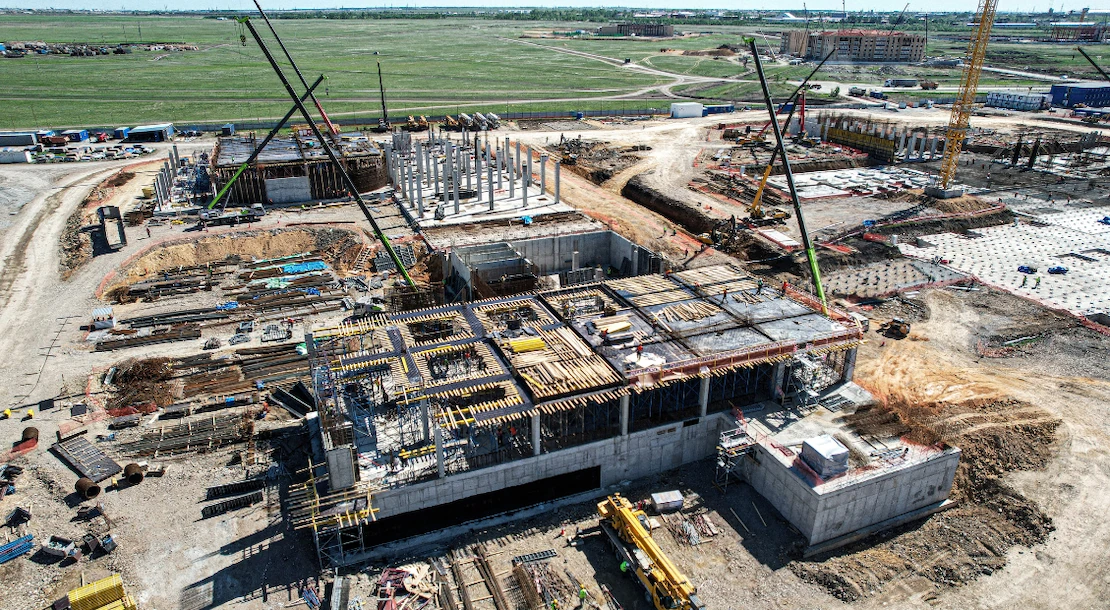
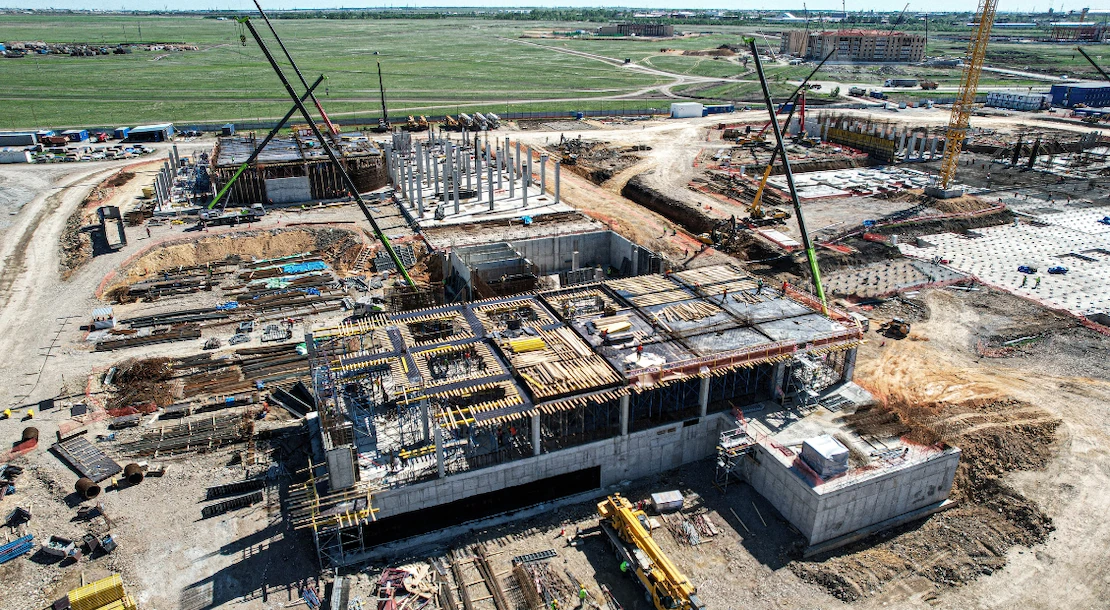
The goal is to ensure not just that projects comply with the Bank’s policies and financing agreements but also that they deliver impact. For example, through the multi-region ENGIE Sustainability-Linked Green Loan, we helped lower the cost of capital and recycle funding for more green investments while reducing emissions, increasing the share of renewables in the generation mix and improving safety. We are also implementing AIIB’s support to Kazakhstan’s first national-level public-private partnership (PPP) hospital. As the first project under a national-level PPP hospital program, it sets a precedent for replication, combining financing with implementation support to advance Kazakhstan’s healthcare development goals.
We also identified early the value of incorporating data analytics into the project cycle. Instead of treating data merely as a reporting checkbox, we view it as critical infrastructure for institutional learning and operational efficiency. Guided by this, PMD led the development of integrated systems for client relationships, and investment processing and management. We have also served as the data guardian for investment operations (IO) data.
Being a young bank has been beneficial. We have the flexibility to adopt new technologies and adapt to growing needs. We recently introduced AI to enhance IO data analytics, including AI-enabled search and summaries on MDB-funded infrastructure projects. We also have a dedicated data team that works closely with the IT department and business units to develop and enhance tools.
Our Client Relationship Management system highlights this approach. By maintaining comprehensive records of all client interactions across departments, it dramatically reduces coordination time. What often takes weeks of back and forth in other organizations takes us only a couple of days. The system eliminates information friction and enables us to launch projects with full visibility into previous outcomes, stakeholder feedback and resource allocation history.
Success requires building the systems, analytical capabilities and collaborative processes that turn information into insight and insight into action. As AIIB enters a new decade of operations, developing economies have shown strong receptivity and enthusiasm for the Bank, signaling their appetite for an MDB that combines strong safeguards and efficiency. We are doing something right, and PMD is proud to contribute to this work.