
AIIB has an International Advisory Panel (IAP) that supports the President and Senior Management on the Bank’s strategies, policies and general operational issues. The panel meets at least twice a year (physically or virtually), including one meeting held alongside the Bank’s Annual Meeting of the Board of Governors.

The President selects and appoints IAP members to an initial two-year term renewable upon completion. Panelists are not salaried but receive a small honorarium. AIIB pays the reasonable costs associated with panel meetings. Here is the current list of panelists:

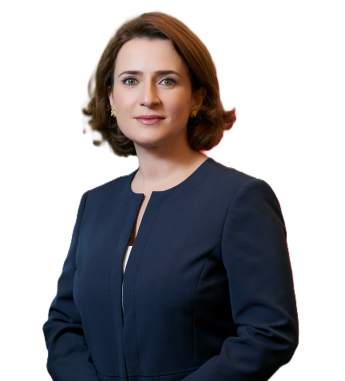
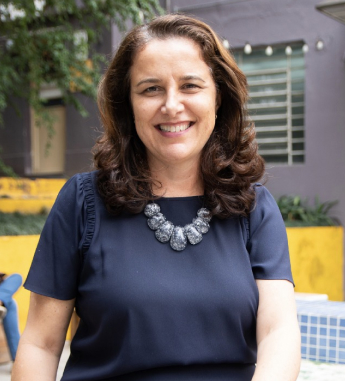
Rachel Biderman

Rachel Biderman

Senior Vice President, South America Field Division, Conservation International

Rachel Biderman oversees Conservation International’s work in the South America region, including the Amazon biome. Most of her career has been focused on climate change and forests, helping to support and create networks across environmental and agricultural sectors and connecting Brazil to international policy processes. She has also integrated her interest in gender and women’s empowerment into her work.

Biderman was the Brazil country head for the World Resources Institute from 2011 to 2020. She also led programs to promote corporate sustainability and public policies at the Center for Sustainability Studies at the Business School of Fundação Getúlio Vargas. A lawyer by trade, she has also worked in private law firms and as a public interest attorney. She had also served in São Paulo’s state government (Brazil), where she focused on air quality, climate change and the protection of ecosystems.

She holds a bachelor's degree in law and a master's degree in environmental sciences from the University of São Paulo, an LL.M. from the American University (USA), and a PhD in Public Administration from Fundação Getúlio Vargas. She was a fellow at Harvard Kennedy School in 2009 on Science, Technology and Society.
Ahmed Galal

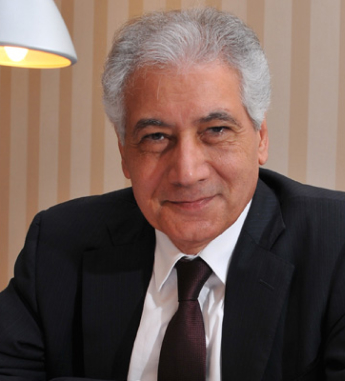
Ahmed Galal

Former Minister of Finance, Egypt

Ahmed Galal chairs the boards of trustees of the Middle East and North Africa Health Policy Forum (MENA HPF) and the Egyptian Foundation for Integrated Development (ALNIDAA) and serves as a member on the UN Committee for Development Policy (CDP) and the board of Baseera (Egypt). He was previously a member of the board of directors of the Center for International Governance and Innovation (CIGI, Canada), the International Institute for Environment and Development (iied, London), Zewail City (Egypt) and Beltone Financial Holding (Egypt). He is currently a columnist for Al Masry Al Youm newspaper in Cairo. Until December 2016, he was the managing director of the Economic Research Forum (ERF) and served as Egypt’s Finance minister from July 2013 to March 2014. Prior to that, he spent 18 years at the World Bank, where he conducted research and provided policy advice to governments across various regions. During a leave of absence from the World Bank (2000-2006), he was the executive director and director of research at the Egyptian Center for Economic Studies (ECES). He has authored and co-authored numerous publications. In 2004, he received the prestigious regional prize for Economic and Social Sciences from the Kuwait Foundation for the Advancement of Sciences. He holds a master's degree in economics from the American University in Cairo and a PhD in economics from Boston University.
Rachel Biderman

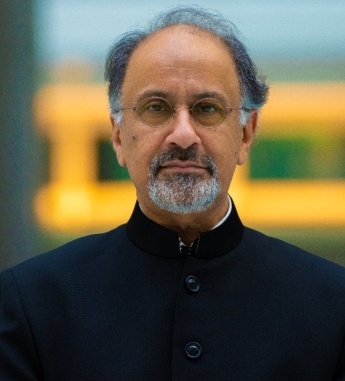
Indermit Singh Gill

Distinguished Visiting Fellow, Hoover Institution, Stanford University

Indermit Singh Gill is a Distinguished Visiting Fellow at the Hoover Institution, Stanford University. Previously, he served as Chief Economist and Senior Vice President for Development Economics at the World Bank Group between 2022 and 2026. Before that, he was Vice President for Growth, Finance, and Institutions at the World Bank, where he helped shape the Bank’s response to the series of shocks affecting the global economy since 2020.

Gill led the World Bank’s 2009 World Development Report on economic geography. His work includes introducing the concept of the “middle-income trap” to describe how countries stagnate after reaching a certain level of income.

Between 2016 and 2021, he was a professor of public policy at Duke University and nonresident senior fellow at the Brookings Institution’s Global Economy and Development program. Gill has published extensively on key policy issues facing developing countries, including economic growth, sovereign debt, natural-resource wealth, labor markets, social security and poverty reduction. He has also taught at Georgetown University, the State University of New York at Buffalo, and the University of Chicago.

Gill has an MA in economics from Delhi School of Economics and a PhD in economics from the University of Chicago.

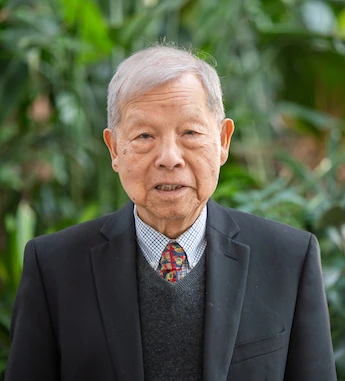
Yukon Huang

Yukon Huang

Senior Fellow, Asia Program, the Carnegie Endowment for International Peace

Yukon Huang is a senior fellow in the Asia Program at the Carnegie Endowment for International Peace. He previously served as the World Bank's country director for China and earlier, as director for Russia and the Central Asian Republics. He is the author of several publications. His research primarily focuses on the Chinese economy and its regional and global impacts. He has made significant contributions to professional journals and major media outlets, including the New York Times, the Financial Times, and the South China Morning Post. He has also served as an advisor to the World Bank and the Asian Development Bank. He holds a PhD in Economics from Princeton University and a BA in Economics from Yale University.
Naoko Ishii

Naoko Ishii

Special Presidential Envoy for Global Commons, University of Tokyo; Professor and Director of the Center for Global Commons

Naoko Ishii is the inaugurating director of the Center for Global Commons after joining the University of Tokyo in 2020. Her career began in 1981 at the Ministry of Finance of Japan, where she focused on international finance and development. She also worked for the International Monetary Fund, the World Bank, and the Harvard Institute for International Development. She was the deputy vice minister of Finance of Japan before being elected as the chief executive officer and chairperson of the Global Environment Facility from 2012 to 2020. She currently serves on the Board of the UN Foundation, ClimateWorks Foundation, Planetary Guardians, Emergent, and Global Pandemic Monitoring Board. She also serves on the Advisory Board of Capitals Coalition and EAT Foundation. She is a member of the Independent High-Level Expert Group on Climate Finance, the China Council for International Cooperation on Environment and Development, and the Global Commission on the Economics of Water. She is on the Leadership Council for the Global Commons Alliance. She has authored several books, two of which have received academic awards. She holds both a BA in Economics and a PhD in International Studies from the University of Tokyo.
Rachel Biderman

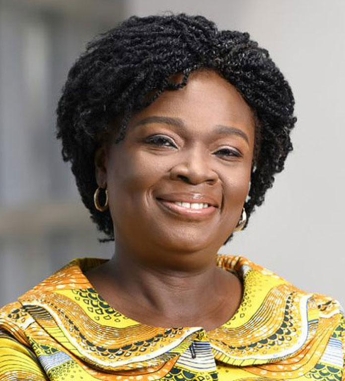
Victoria Kwakwa

Former Regional Vice President, Eastern and Southern Africa; East Asia and Pacific, World Bank Group

Victoria Kwakwa is an economist and development expert with over three decades of experience at the World Bank Group. Most recently, she served as Regional Vice President for Eastern and Southern Africa from 2022 to 2025, leading the World Bank’s engagement with 26 economies and overseeing a large portfolio of operations, analytical work, technical assistance and policy dialogue. Previously, she served as Regional Vice President for East Asia and Pacific. Kwakwa holds a combined degree in economics and statistics from the University of Ghana and a PhD in economics from Queen’s University in Canada.

Nargiz Nasrullayeva

Nargiz Nasrullayeva

Former President of the American Chamber of Commerce and Former Principal Advisor to CEO of Sovereign Wealth Fund

Nargiz Nasrullayeva has over 20 years of senior management experience in both the private and public sectors. From 2017 to 2024, she was an advisor to the CEO of the Sovereign Wealth Fund of Azerbaijan. Prior to that she served as the Executive Director of the American Chamber of Commerce in Azerbaijan for 11 years, before becoming its President and Chair of the Board from 2022 to 2024. Her experience in commercial real estate includes roles as Centre Manager at Regus Business Centre and COO at Landmark Business Center. Currently, Nargiz advises the CEO of Landmark Business Center and has been a member of the Board of Directors of 100 Business Women of Azerbaijan since 2013. Additionally, she chaired the Board of Azerbaijan Rigs and served on the Management Board of SOCAR Türkiye Aegean Refinery. Nargiz holds a BA in Legal Regulation of Economy from Western University in Baku and an MA in Public Administration from Harvard Kennedy School, along with executive education from Stanford and Harvard Business School.