
Climate change and human health are intrinsically linked, and with each extreme climate event that occurs the delicate balance of this relationship becomes clearer. Whether it is the recent wildfires in South Korea or flooding in Jakarta, the impact on human health is evident. Aside from immediate threat of death from these climate shocks, there are also long-term health implications to consider.
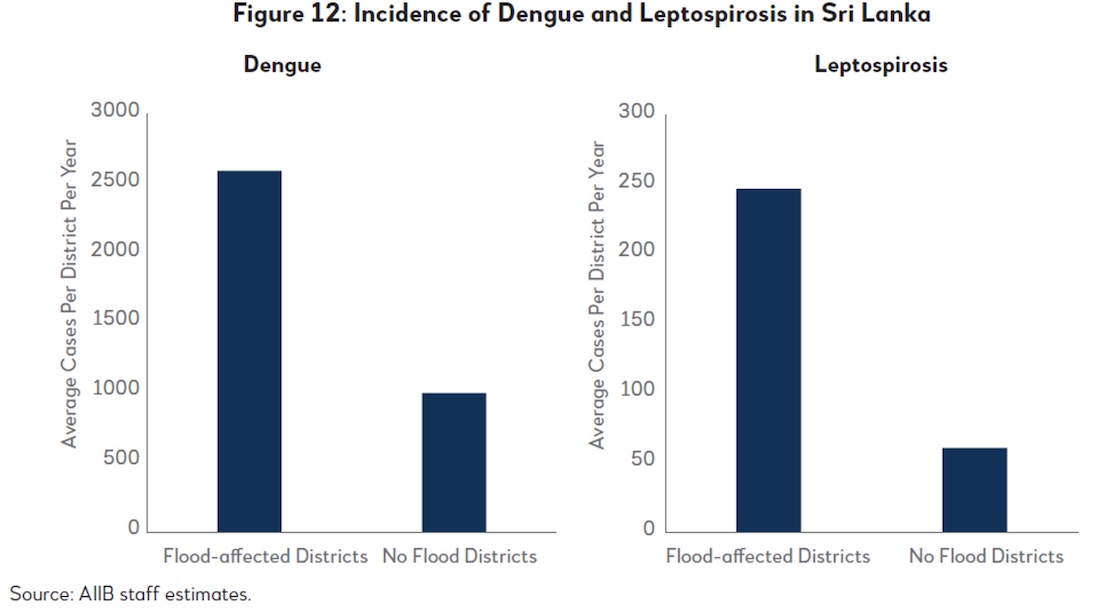
Factors such as nature degradation and biodiversity loss – while being harder to identify – can also have a devastating impact on human health. For example, the incremental drying of wetlands may not be immediately apparent, but over time this reduces a region’s ability to deal with floods. In addition to direct injuries, death and damage to health infrastructure, floods can increase the presence of fatal water- and vector-borne diseases such as dengue and malaria (see figure below), causing increased pressure on already stressed healthcare systems.
The scale of the challenge posed to human health by climate change and nature degradation cannot be understated. Currently, 3.3 billion people are facing increased health risks due to climate and impacts on health outcomes will be felt along existing social fault lines. Citizens of developing countries are the most vulnerable. Infectious disease prevalence in the tropics will rise with heat and flooding. Heatwaves also affect the urban poor and rural citizens in these countries disproportionately.
On World Health Day, it is crucial that we recognize this escalating challenge and look for solutions to mitigate the impact on human health. At AIIB, our mission aims for sustainable economic development for our members. We believe that a holistic, equity-focused approach to infrastructure finance that integrates health, climate and nature is crucial.
In our recent “Infrastructure for Planetary Health” flagship report, we empirically document the many impacts climate change and nature has on health, and with it the role that infrastructure can play in uplifting health outcomes.
The report posits that we must go beyond a “healthcare infrastructure approach” and adopt a “planetary health approach” to connect human, animal and environmental health to address the interconnected challenges effectively. This encompasses a mixture of traditional infrastructure and nature-based solutions.
For example, gray infrastructure, such as flood barriers, is widely used to protect communities that are at risk. But there are nature-based solutions that can have a similar impact while producing net positive health outcomes.
For example, the regeneration of mangrove forests can provide flood defense properties, support diverse aquatic ecosystems, provide effective carbon sequestration, protect livelihoods and increase availability of nutrition such as fish, crustaceans and mollusks.
Gray infrastructure can also be improved to deal with climate-health impacts. Roads need to be climate resilient to avoid reduced heath access during storms. Refitting urban infrastructure with heat shielding, as well as deploying green spaces to avoid heat buildup, will have to become mainstream investments.
Implementing solutions like these can be complex, so MDBs, governments and the private sector must collaborate to deliver significant financing. By reorienting infrastructure investments toward planetary health, we can safeguard the ecosystems that provide clean air, water, food security and resilience against climate disasters and drive sustainable economic growth and development.
Failing to do so will have enormous social and financial consequences. The World Economic Forum and consulting firm Oliver Wyman estimate that by 2050, climate change will cause an additional 14.5 million deaths and USD12.5 trillion in economic losses worldwide. Therefore, institutions with the ability to leverage large-scale finance will be essential in meeting this challenge.
This sentiment is reflected in AIIB’s first Health Strategy. Launched in 2024, it provides a framework to guide the bank’s investments in health. It formalizes AIIB’s commitment to developing solutions which cut across health, climate, nature and infrastructure, which the Bank has historically financed. For example, AIIB’s Khyber Pakhtunkhwa Cities Improvement Project in Pakistan, cofinanced with the Asian Development Bank, aims to mitigate climate impacts on human health.
Rapid growth and declining levels of green space meant the cities were suffering from an urban heat island effect, increased air pollution and flood risk. In response, part of AIIB’s USD200 million investment aims to rehabilitate and expand the local Shimla Hill Park to increase access to green space, to help improve physical and mental health while reducing air pollution and heat stress.
This is just one example of how aligning development finance to planetary health priorities can have a tangible impact on the ground. However, the health implications of climate change and nature degradation are broad, and financing institutions must align their strategies to protect human health in response.