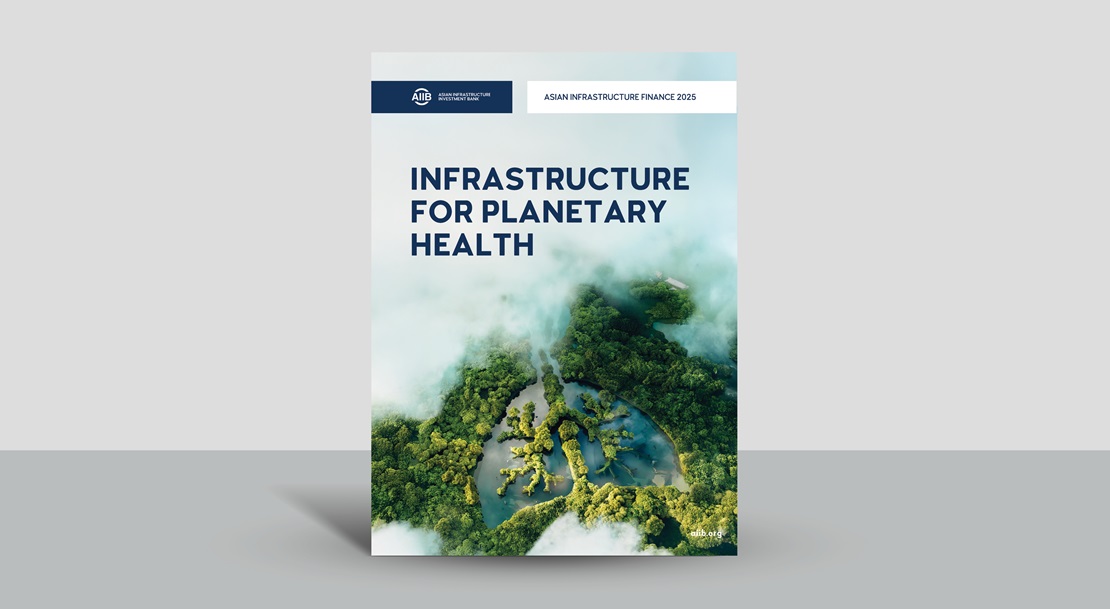

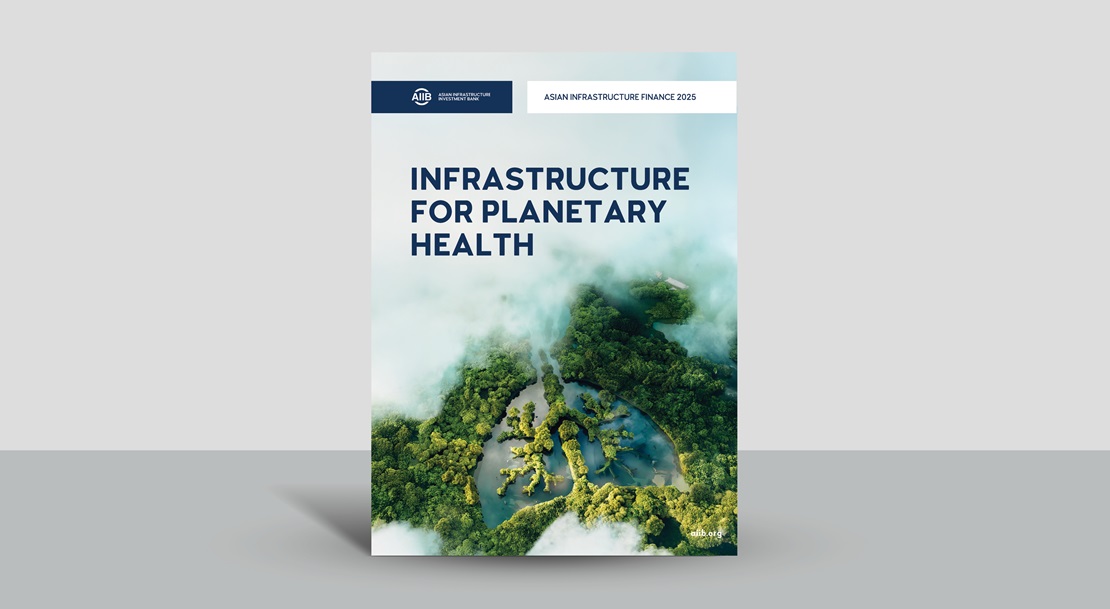
Amid accelerating climate change and an increasingly challenged global health system, a new report from the Asian Infrastructure Investment Bank (AIIB) redefines how we think of, invest in, and build systems to safeguard human health. Without novel approaches, human-induced changes to climate nature and biodiversity threaten to undermine decades of progress in global health.
“Investment in human health is an investment in our future—stronger communities, resilient livelihoods, and lasting prosperity,” said AIIB President Jin Liqun. “Planetary and human health are inseparable. At AIIB, we are committed to ensuring infrastructure acts as a catalyst for better health outcomes and environmental resilience. By scaling up investment in infrastructure for planetary health, we can break the cycle of environmental degradation and declining health.”
AIIB launched the 2025 Asian Infrastructure Finance Report, titled “Infrastructure for Planetary Health,” at the fifth edition of the Finance in Common (FiCS) Summit in Cape Town, South Africa.
Drawing on data and case studies from across the world, the report covers examples of how infrastructure development can improve public health outcomes. These include measures to control air pollution and mitigate the impact of water- and vector- borne diseases, such as malaria and dengue, in developing economies through infrastructure investment.
AIIB Chief Economist Erik Berglof said the concept of infrastructure for planetary health arrives at a pivotal moment: “Changes to the climate, nature and biodiversity are having a catastrophic impact on human health and well-being. Currently a quarter of global deaths a year can be attributed to avoidable environmental factors. Infrastructure for planetary health, for the first time, considers the tremendous health co-benefits of sustainable infrastructure development.”
The report outlines three key investment themes financiers can enact to achieve this concept:
- Investing in accessible, green and resilient healthcare infrastructure. Increasing the accessibility and climate resilience of healthcare would ensure the maintenance of effective operations during disasters and extreme weather events and adapt to changing disease patterns due to climate change and nature degradation.
- Scaling up green infrastructure and opting for ‘health-in-infrastructure’ approach. Reducing reliance on fossil fuels, backed by renewables and adequate transmission, reduces population exposure to air pollution.
- Investing in nature-based solutions. Nature-based approaches in infrastructure or investing directly in nature deliver multiple benefits to health and well-being. Well-functioning ecosystems provide clean air and water, food, medicines and protection against extreme weather events.
“The global health landscape has evolved, and so must our response. All infrastructure – whether energy, transport, water or digital – should be guided by health impact. Multilateral development banks must realize their convening power to support investors to identify and mobilize the needed financing for new infrastructure for planetary health,” Berglof added.
Incorporating health, climate mitigation and adaption, nature-based solutions, and conservation into investments is already a key priority at the Bank and forms a key part of its Climate Action Plan (CAP) and inaugural health strategy, which was launched in December 2024. As part of the CAP, AIIB signalled its intention to focus on solutions that simultaneously mitigate climate change, build resilience, enhance adaptation and offer co-benefits for biodiversity and nature conservation. While the health strategy provides a roadmap to address health challenges across members and underscores AIIB’s commitment to social development and inclusion by enabling it to contribute to improved health outcomes in Asia and beyond. AIIB has financed 22 health projects with an approved value of USD4.87 billion.
About AIIB
The Asian Infrastructure Investment Bank (AIIB) is a multilateral development bank whose mission is Financing Infrastructure for Tomorrow in Asia and beyond—infrastructure with sustainability at its core. We began operations in Beijing in 2016 and have since grown to 110 approved members worldwide. We are capitalized at USD100 billion and AAA-rated by the major international credit rating agencies. Collaborating with partners, AIIB meets clients’ needs by unlocking new capital and investing in infrastructure that is green, technology-enabled and promotes regional connectivity.