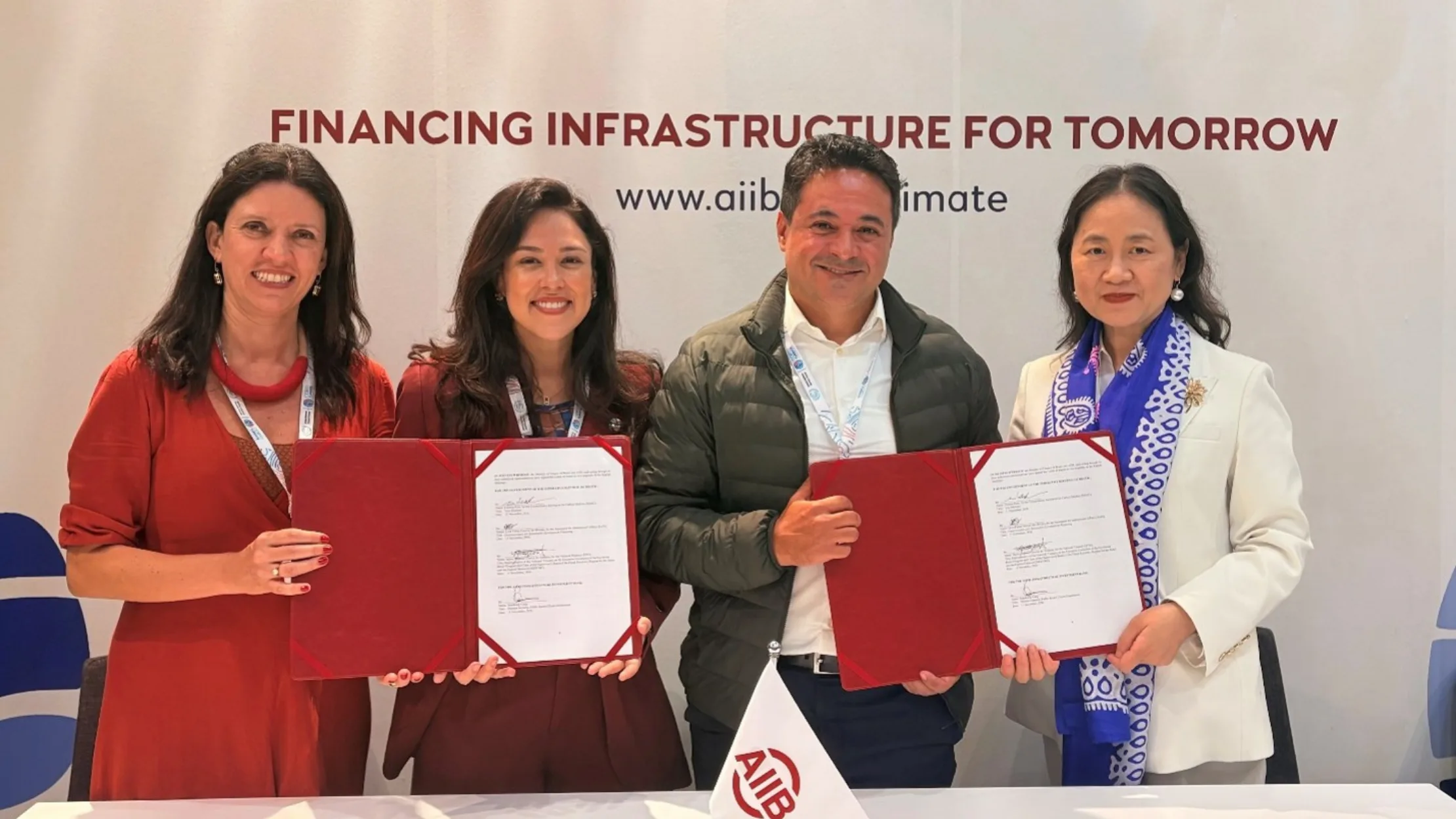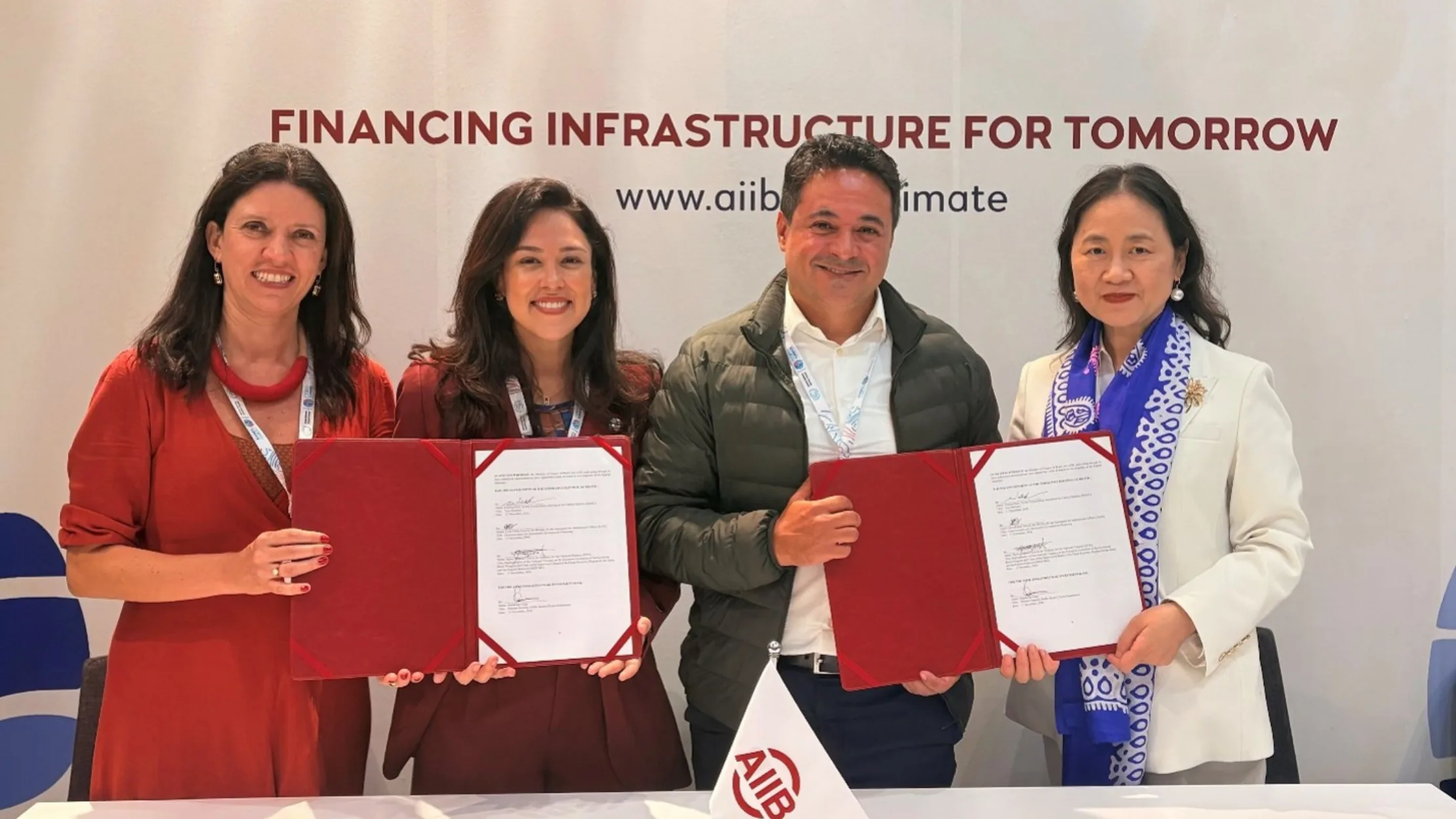
The Asian Infrastructure Investment Bank (AIIB) and Brazil’s Ministry of Finance (the Ministério da Fazenda) have agreed to strengthen cooperation on sustainable finance, investment mobilization and carbon markets.
Under a letter of intent signed on the sidelines of COP31 in Türkiye, the two institutions will advance knowledge exchange and capacity building in areas such as blended finance instruments and project appraisal methodologies. They will also explore opportunities to support Brazil’s regulated carbon market and connect AIIB members and Asian investors with Brazil’s sustainable investment platforms, including Eco Invest Brasil.
The enhanced partnership builds on AIIB’s climate-focused policy-based financing for Brazil, signed in September, which supports policy reforms under Brazil’s Ecological Transformation Plan.
The letter was signed on behalf of AIIB by Xiaohong Yang, Director General, Public Sector Clients Departments East-West and North, and on behalf of Brazil’s Ministry of Finance by Cristina Reis, Vice Minister and Head of the Extraordinary Secretariat for Carbon Markets; Livia Oliveira, representing the Secretariat for International Affairs; and Mario Gouvêa, representing the National Treasury on the Executive Committee of the Eco Invest Brazil Program and Chair of the Supervisory Board of the Fiscal Recovery Regime for the States and the Federal District.
Commenting on the partnership, Yang said: “We will now turn our policy-based partnership with Brazil into a platform of knowledge exchange on blended finance and private capital mobilization, connecting Brazil’s climate finance innovations with partners across Asia and beyond.”
About AIIB
The Asian Infrastructure Investment Bank is a multilateral development bank dedicated to financing “Infrastructure for Tomorrow,” with sustainability at its core. AIIB began operations in 2016, now has 111 approved members worldwide, is capitalized at USD100 billion, and is AAA-rated by major international credit rating agencies. AIIB collaborates with partners to mobilize capital and invest in infrastructure and other productive sectors that foster sustainable economic development and enhance regional connectivity.