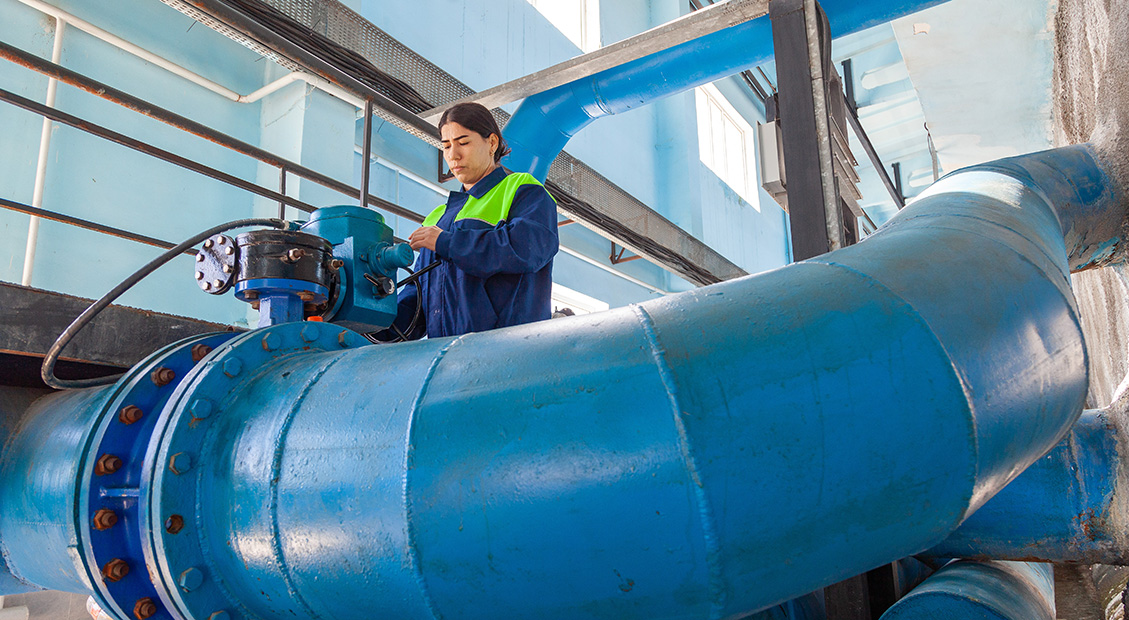

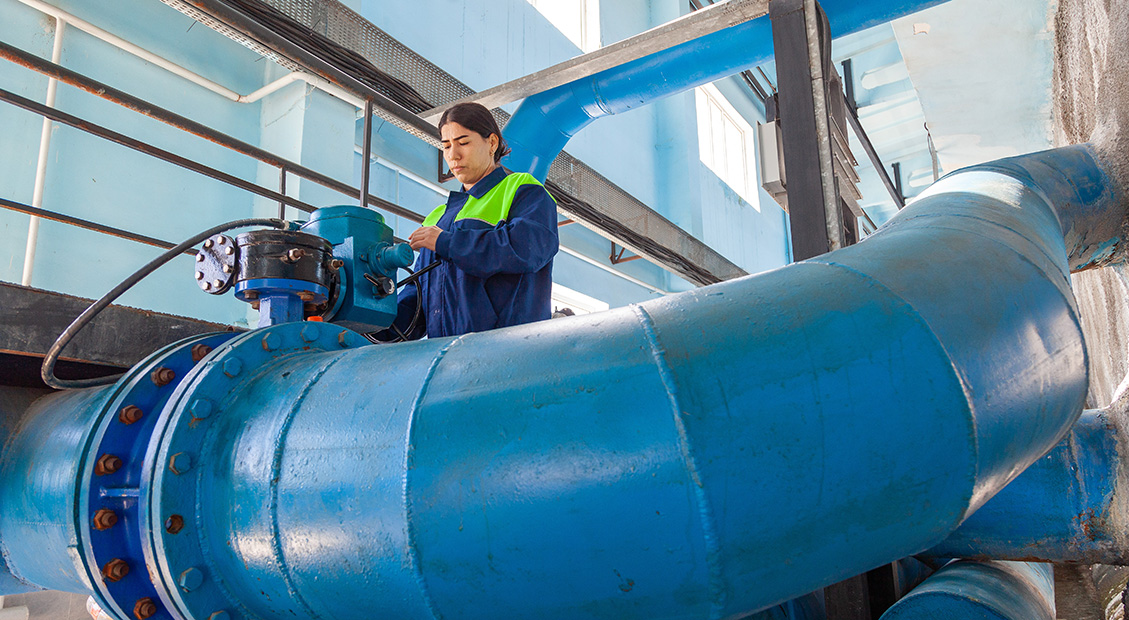
Across the globe, infrastructure is one of the least productive and least digitized sectors. Infrastructure owners and operators have struggled to integrate technology into their operations due to a lack of knowledge about the availability and benefits of technology. For example, this is a particular problem in the water sector of Central Asia, where 25%-30% of water is lost due to leakage, emphasizing the need to consider how technology could help address these challenges.
These infrastructure technologies (InfraTech) include network monitoring systems using satellites or drones to identify leaks in water pipelines that have already successfully improved the safety and financial efficiency of water projects across the globe.
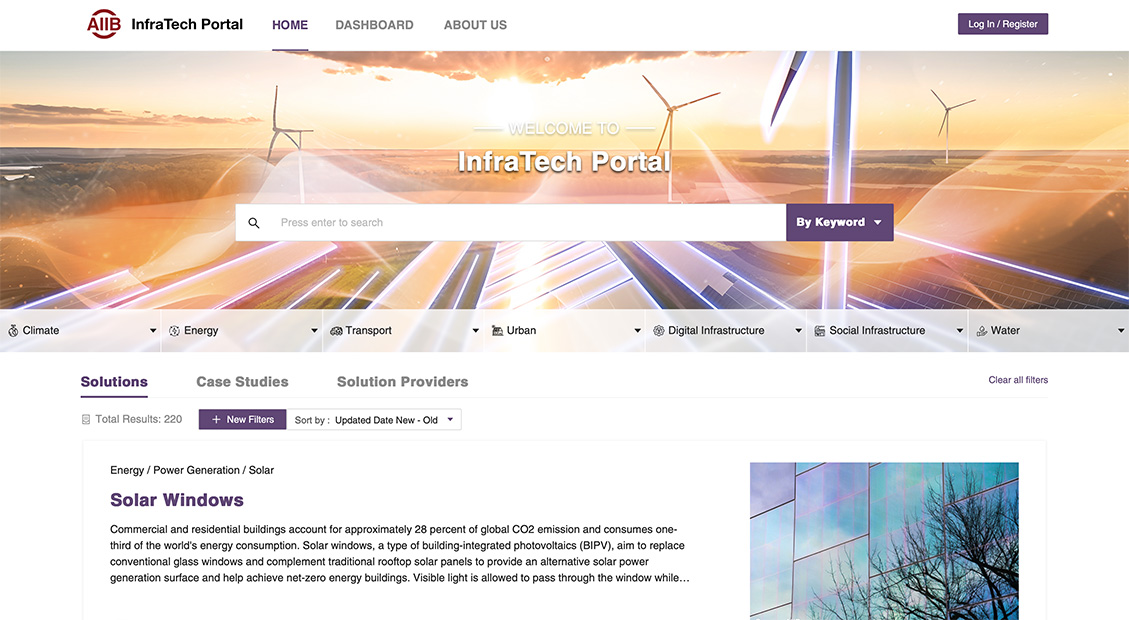
In line with its mission of financing the Infrastructure for Tomorrow (i4t) and its thematic priority of technology-enabled infrastructure, AIIB launched the InfraTech Portal to help infrastructure developers, owners, and operators overcome the information gap between problems and technology solutions. The InfraTech Portal is a free and neutral online repository, showcasing a diverse array of technologies. Each listed solution is accompanied by a selection of global vendors, enabling infrastructure developers to easily discover effective solutions and connect with providers. Several of these solutions have already proven beneficial to AIIB’s clients.
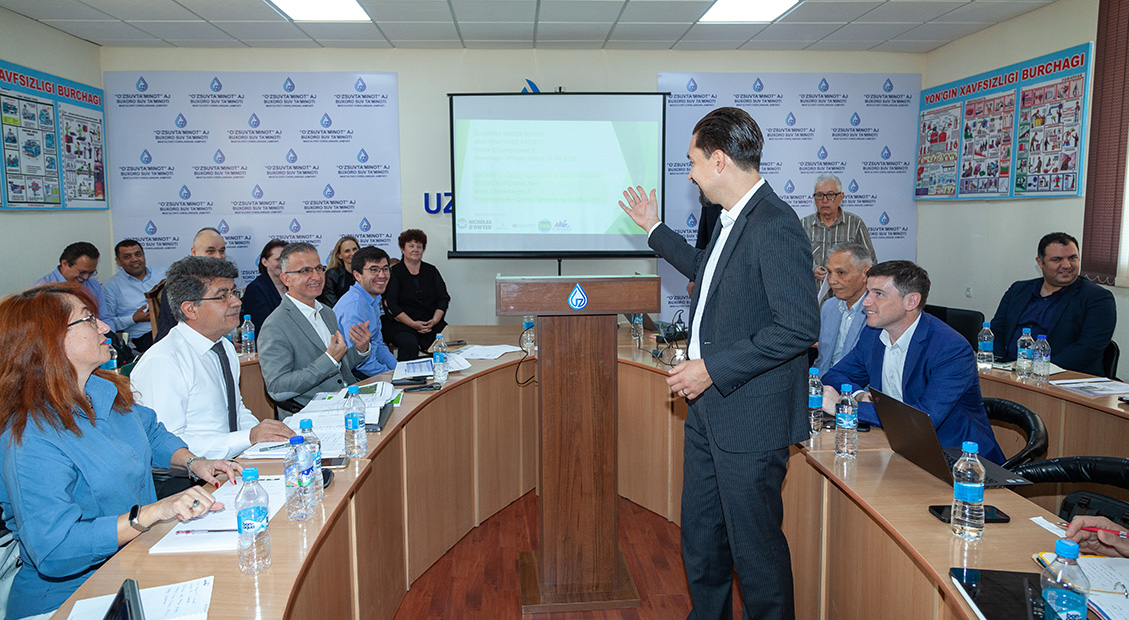
For example, citizens of Uzbekistan’s Bukhara region once struggled to access reliable sanitation and water services. The regional water company inherited a network of outdated pumping stations, aging distribution pipes and chronic water leakage. In 2022, AIIB worked with the Government of Uzbekistan to finance USD248.8 million of the Bukhara Region Water Supply and Sewerage Phase II project. Part of the funds helped the water utility in the Bukhara region implement technology-enabled infrastructure solutions to tackle systemic water loss.
As noted by Zacharias Ziegelhöfer, AIIB’s project team leader: “The water company plans to install smart meters for its production and distribution facilities, which will enable it to monitor water usage and reduce water loss. In addition, the installation of mechanical meters for residential users will facilitate the shift to billing and collecting water tariffs based on the volume of water consumed. Together, these measures should improve the financial performance of the water company.”
AIIB has also supported the Government of Uzbekistan’s ongoing digital transformation efforts by providing guidance to regional water companies on various technology solutions to detect water leaks, such as supervisory control and data acquisition systems and smart metering. Mukhammad-Ali Musadinov, head of Uzbekistan’s Bukhara Water Supply project coordination unit, said: “Technology has been very important to Bukhara’s water supply and sewage upgrade. We are keen to explore the many more ways we can use advanced technology to improve our regional water infrastructure.”
The InfraTech Portal can help other infrastructure stakeholders, technology providers and investors make the same connections. It allows providers to showcase their InfraTech solutions and reach new customers while stakeholders can search for technologies that deliver financial, environmental and social benefits.
To demonstrate real-life usefulness, InfraTech solutions on the portal are accompanied by practical case studies. These include information on vendors that supplied the technology, the infrastructure operator that implemented it and measurable results achieved. For example, some water utilities in the UK employed synthetic aperture radar satellites to monitor 6,000 km of pipework and prevented over 2 million liters of daily leakage.
Owners and developers that have successfully applied technology in their operations can upload case studies, highlighting their success and support other organizations on their path towards development.
Visit the InfraTech Portal now to start sharing InfraTech solutions, explore InfraTech that can improve infrastructure or learn more.
For any questions, contact the InfraTech Portal team at info.infratechportal@aiib.org.