

Hydropower has and continues to make an essential contribution to increasing energy access, boosting prosperity and meeting climate targets. In 2019, hydropower accounted for nearly half of the global renewable energy capacity with about 1,300 gigawatts (GW) and approximately 16 percent of global electricity generation. In Asia, hydropower is the dominant power source in Afghanistan, Bhutan, Cambodia, Georgia, the Kyrgyzstan, Lao People's Democratic Republic, Myanmar, Nepal and Tajikistan, where it constitutes more than 50 percent of total annual power generation.1
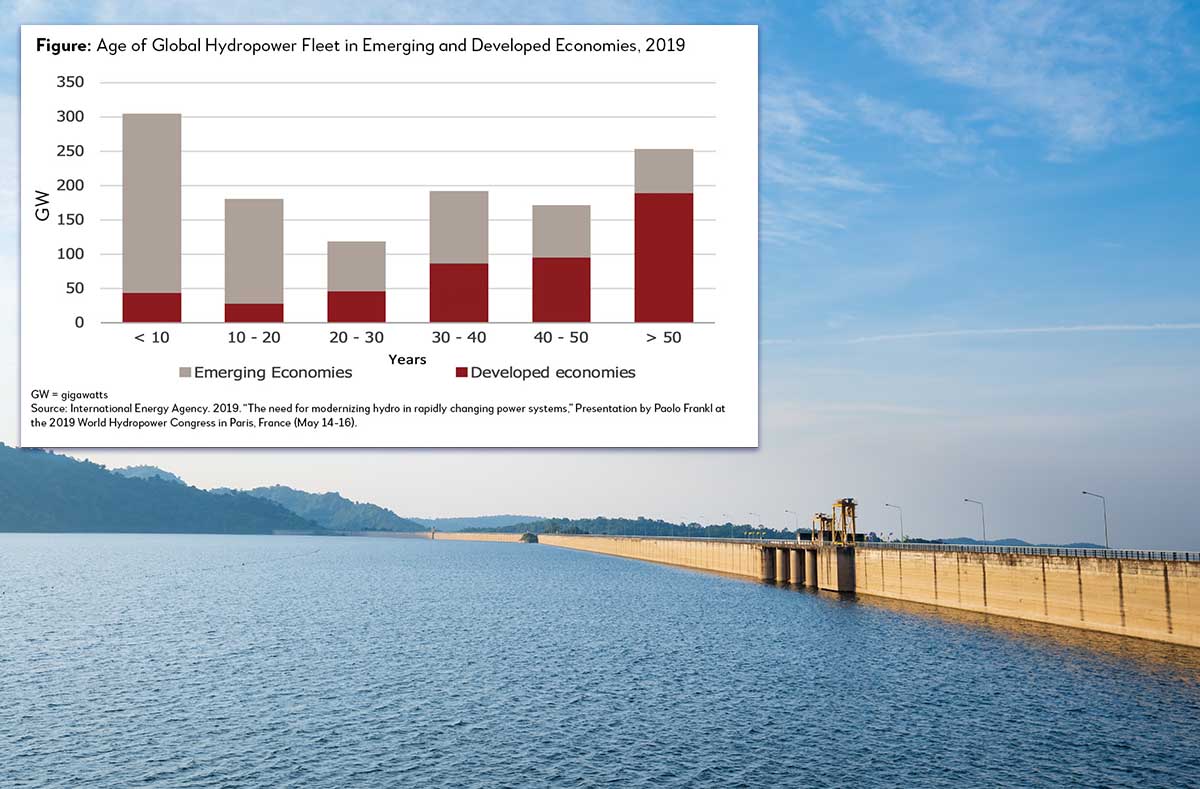
However, while much attention is given to new hydropower development, there is also an increasing need to modernize and optimize the current assets to ensure hydropower’s vital role in energy systems is sustained and enhanced. Hydropower has an aging fleet, with nearly half of its global capacity more than 30 years old (600 GW) and about one-third older than 40 years old (400 GW).
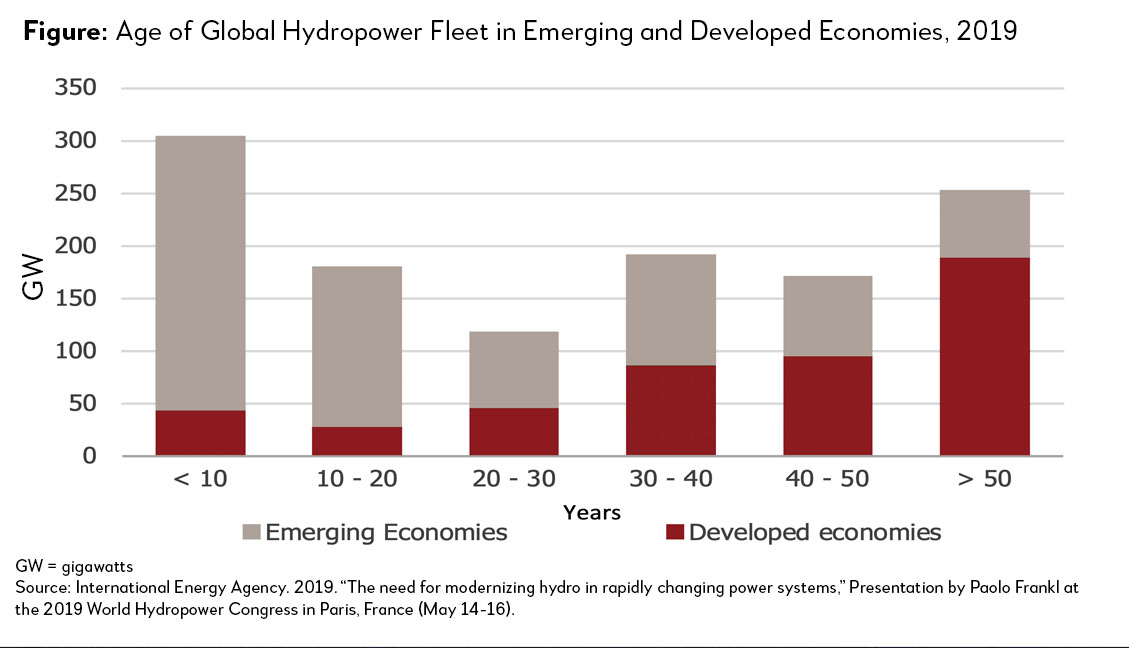
In Asia, home to half of the world’s hydropower capacity (650 GW), the need for modernization is ever-present. By 2030, over one-third of the existing capacity will have undergone, or be due for, modernization. This rises to 50% when excluding China.2 According to a study carried out by the International Hydropower Association (IHA), on behalf of the Asian Infrastructure and Investment Bank (AIIB), the countries presently in most need of hydropower modernization investments include India, Indonesia, Philippines, Russia and Türkiye.
But why is modernization important? The performance and reliability of components are reduced as stations age, impacting output, revenue and safety. Therefore, modernization programmes—from repairing and replacing components to implementing innovative technologies—are needed to extend the lifespan of stations and maintain or even increase their output. There is also an opportunity to use modernization to deliver additional co-benefits such as providing greater flexibility services to support higher penetrations of variable renewables, addressing environmental and social legacy issues and building climate resilience to address more frequent droughts and flood events.
In light of these aging assets and hydropower’s critical role in providing clean and reliable electricity in Asia, AIIB is engaging with IHA and its members to better understand the current needs and opportunities for modernization of hydropower stations across Asia. Furthermore, AIIB is working together with the World Bank to modernize two existing hydropower stations in the region. In Tajikistan, AIIB is supporting the rehabilitation of three power generating units of the Nurek Hydropower Station as well as strengthening the safety of the Nurek Dam. In Pakistan, AIIB is assisting in the development of the existing Tarbela Dam Tunnel 5 to provide additional power generation capacity. Once completed, both these projects combined will provide an additional 2.4 GW of renewable energy capacity.
Despite the current COVID-19 crisis, hydropower and its unique flexibility services are helping to keep the lights on and providing essential health and other services. This was best demonstrated in India on April 5 as hydropower played a key role in successfully managing 31 GW of load variability in only nine minutes.3 Overall, multilateral development banks, such as AIIB, will remain vital players in addressing the perceived risks, facilitating access to finance, and ensuring the delivery of high-quality hydropower projects to international standards, particularly in challenging times for least developed countries. We are confident hydropower modernization projects will become a regular sight across Asia and beyond.
Notes:
* This blog post is based on a study on Hydropower Modernization Needs in Asia commissioned by AIIB from the International Hydropower Association in 2020. The AIIB has prepared a working paper to highlight the main insights and findings from the study.
1 International Hydropower Association (IHA).
2 International Energy Agency. 2019. “The need for modernizing hydro in rapidly changing power systems,” Presentation by Paolo Frankl at the 2019 World Hydropower Congress in Paris, France (May 14-16).
3 See https://thewire.in/energy/indias-power-system-operators-demonstrate-the-fine-art-of-grid-management.
and https://www.thehindu.com/news/national/explainer-power-managers-strategy-of-using-hydro-and-gas-power-during-lights-out-may-have-paid-off/article31266599.ece.