
In 2023, the Asian Infrastructure Investment Bank (AIIB) approved a EUR100 million investment project in Romania to help individuals purchase green homes that are safe, comfortable and climate-ready. The project is in line with AIIB’s mandate of enabling clients to build Infrastructure for Tomorrow (i4t) and promoting green finance innovation. Under the project, AIIB subscribed to a 10-year bond issued by a local partner bank, Banca Transilvania, to support eligible sub-projects in Romania's individual retail green mortgage market.
The project has been running for nearly two years and has achieved significant milestone progress. By the end of 2024, AIIB's funding had supported 792 individual green mortgages, totaling approximately EUR 55 million. Since the project's implementation, 8 gigawatt-hours of primary energy consumption have been saved, and 1,613 tons of carbon dioxide equivalent greenhouse gas emissions have been reduced. Most borrowers apply for mortgages for self-occupancy rather than for investment or renting.
Close Collaboration with Local Banks and Industries
Through this project, AIIB has closely collaborated with Banca Transilvania to establish the "bond subscription + green on-lending" model, providing not only financial support but also setting an example of industry-finance integration by aligning with AIIB's environmental and social standards. Buildings are the largest energy end-users in the European Union, accounting for over 41% of total energy consumption. With most of the energy used for space heating powered by imported fossil fuels, energy efficiency in buildings is among the key priorities of the European green policies. This project has built trust and understanding between AIIB and local banks, laying a solid foundation for future in-depth cooperation.
In this project, residential properties applying for green mortgages are required to meet the highest two standards (A0, A) set up by Romania's energy performance regulations, documented by mandatory national Energy Performance Certificates at the level of Nearly-Zero Energy Buildings (nZEB). Some sub-projects have obtained additional voluntary green building certifications (such as LEED Platinum, Green Homes, Passive Homes), formally registered and third-party verified by the Romanian Green Building Council.
“The interest in green mortgages has been triggered by the market, by driving awareness and demand for building sustainability among market stakeholders,” said Diana Mazurchievici, Banca Transilvania’s director for ESG Integration and Investment Relations. “Yet, market penetration of green properties is still very low, and by our estimates, below 1% out of the overall stock.”
Local green building real estate developers, contractors and operators have also indirectly contributed to this project, increasing the supply in the local green building market (not only residential but also commercial and public buildings), driving multi-party win-win among residents, enterprises and society.
One of the developers providing the market with high-quality sustainability properties emphasized that green and sustainable buildings are not only about lower utility bills, but also offer a conceptually higher quality of life. However, the higher upfront costs mean that the market still struggles to fully price green buildings. Developers are encouraged to see the growing awareness among financial institutions and the incentives that some institutions provide for early adopters of high-sustainability concepts. The bar of green requirements, however, should be kept high.
Green Building Benefits
The green buildings employ several elements, including thermal protection (building envelope) insulation at the level of passive house standards, triple glazing with inert gas filling, selective low-emissive coating, high-efficiency ground-to-water heat pumps as the main heating source, low-temperature radiant heating, waste heat recovery balanced ventilation, district-level rainwater harvesting, locally sourced or low-carbon materials with a low carbon footprint, fully recyclable or reusable materials and a comprehensive and smart energy-saving management system.
Green buildings provide a better indoor environment throughout the year, are better adapted to climate change, offer lower utility bills and, therefore, have lower operational costs throughout their lifecycle. They are more likely to keep their property value throughout their lifetime and are also more likely to comply with tougher regulations in the future than standard market practice.
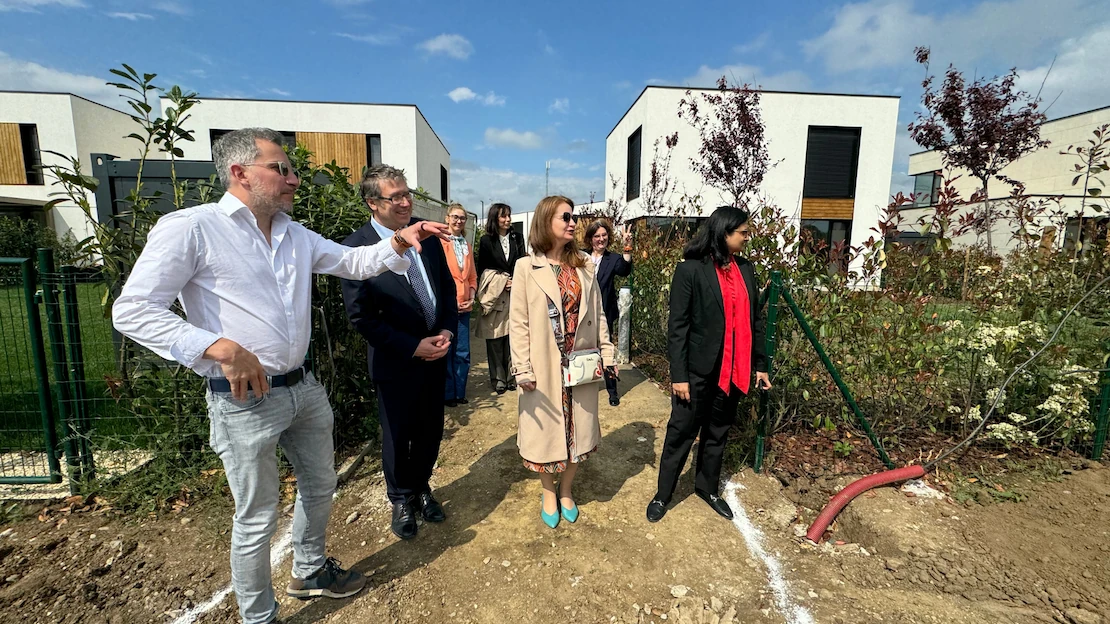
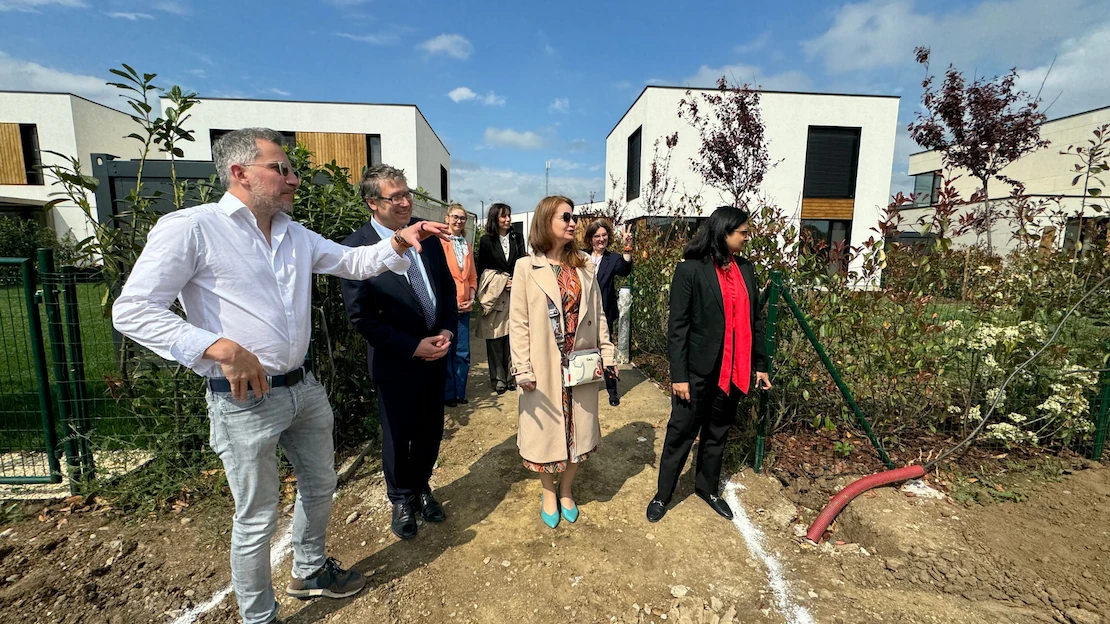
One of the green residential complexes where AIIB’s sub-projects are located, is in the suburbs of Bucharest and is Romania's first nZEB self-contained community. All apartments in the community are LEED Platinum-certified, while schools and sports complexes within the community are expected to be EDGE-certified. As of this writing, over 85% of the residential units have been sold, demonstrating that the community welcomes green infrastructure, with sustainability, innovation and connectivity at its core. The community's overall energy performance and carbon emissions are over 60% lower than other communities that do not employ green elements.

AIIB’s Commitment
Globally, the actual investment in green infrastructure remains well below expected targets. In the current environment of increased global uncertainty, AIIB remains committed to prioritizing green infrastructure and supporting our Members in meeting their environmental and related development goals by financing projects that deliver local environmental improvements, including biodiversity and nature-based solutions and investments dedicated to climate mitigation and adaptation actions. We have committed to aligning all our new financing operations with the goals of the Paris Agreement by July 1, 2023. This means that AIIB’s investment operations must be consistent with low-carbon, climate-resilient development pathways. Our goal is to exceed a 50% share of climate finance in actual financing approvals every year until 2030. We look forward to working closely with our partners to achieve significant growth in economically, environmentally, and socially sustainable investments.