

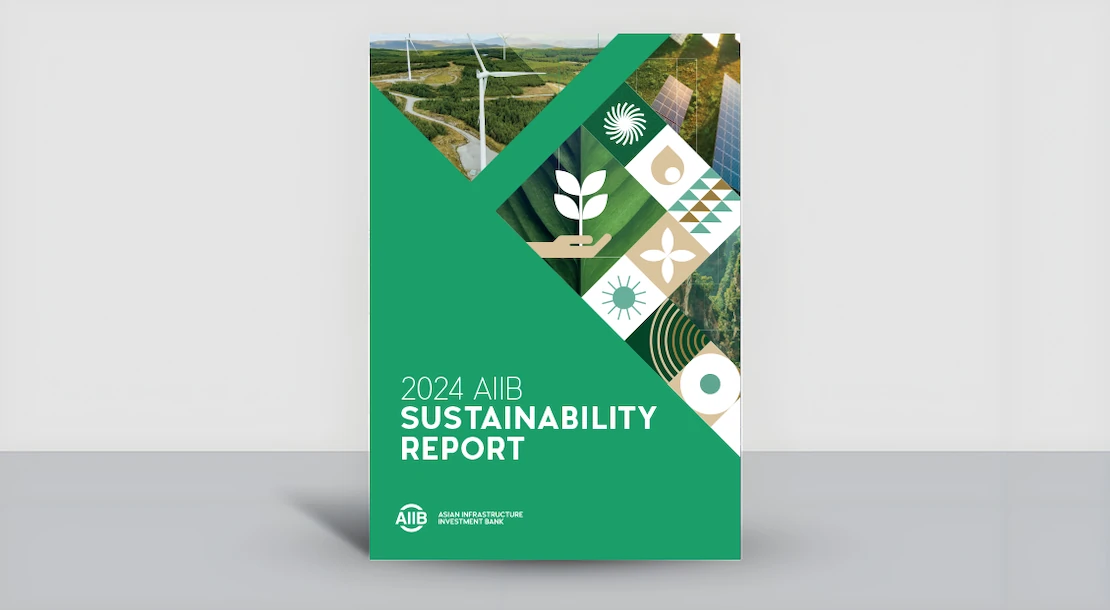
At AIIB, our mission to finance Infrastructure for Tomorrow is inseparable from our commitment to transparency. This month we took a decisive step forward in our mandate with the release of our inaugural Sustainability Report, which voluntarily applies the International Sustainability Standards Board (ISSB) disclosure requirements. This is more than a reporting milestone. It is a clear signal to our members, investors and partners that AIIB is committed to consistent, comparable and credible information on how climate-related risks and opportunities shape our work.
This publication was shaped by three imperatives: First, reinforcing our mandate by ensuring our own operations reflect the sustainability principles we champion. Second, strengthening our engagement with capital markets by providing the data and disclosures investors increasingly expect. Third, meeting the evolving expectations of our members and stakeholders for leadership on climate challenges and for transparency in how these challenges are managed.
We applied the ISSB standards because they set the global baseline for sustainability and climate-related financial disclosures. Applying these standards allows us to speak the same language as our peers and the private sector and to provide global capital markets with information that should be useful to investors. The report takes a climate-first approach by adopting the transitional reliefs provided by the ISSB to ease the reporting burden in the first year of publication, with the aim of expanding the scope of disclosures over time.
Sustainability is embedded in our governance, investment strategy and operations. The report demonstrates how we integrate climate considerations into our decision-making and how we hold ourselves accountable for results. In 2024, 67% of AIIB’s regular financing supported climate-related investments, surpassing our 50% target for the third year in a row. All new financing operations since June 2023 have been aligned with the goals of the Paris Agreement, ensuring that every project contributes to a low-carbon, climate-resilient future.
We also assessed the potential impact of climate-related risks on AIIB’s financial position. Using well-established climate scenarios, we examined both physical and transition risks across our investment and treasury portfolios. The results show that climate-related financial risks are not currently material to the Bank. This reflects the resilience of our portfolios and the strength of our governance and risk-management frameworks.
We included a voluntary disclosure of our financed emissions for the first time, calculated by using the Partnership for Carbon Accounting Financials methodology. These disclosures cover both our investment operations and our treasury liquidity portfolio. Measuring financed emissions is complex, but it is a critical step in understanding the climate impact of our financing and identifying opportunities to support our members’ just transition to low-carbon economies.
While this report is a significant achievement, it is also just a starting point. We recognize that improving methodologies, ensuring data consistency and capturing Scope 3 greenhouse gas emissions will take sustained effort. Accordingly, we are committed to continually improving the breadth and quality of our disclosures, refining our data systems and strengthening our analysis so that we can provide the market and our members with information they can act on.
This report is the result of a collective, Bank-wide effort. We are grateful to our staff for their professionalism, our Board for its guidance and our stakeholders for their trust. The Sustainability Report is both a reflection of where we are today and a foundation for where we are going. It will guide our ongoing dialogue with members, investors and partners on how AIIB can deliver lasting impact while upholding the highest standards of transparency.
We will continue to embed sustainability into every aspect of our operations, strengthen the confidence of those who work with us, and contribute to a more resilient, inclusive and sustainable future. Transparency is an obligation – as well as one of the most powerful tools we have to deliver on our mandate.