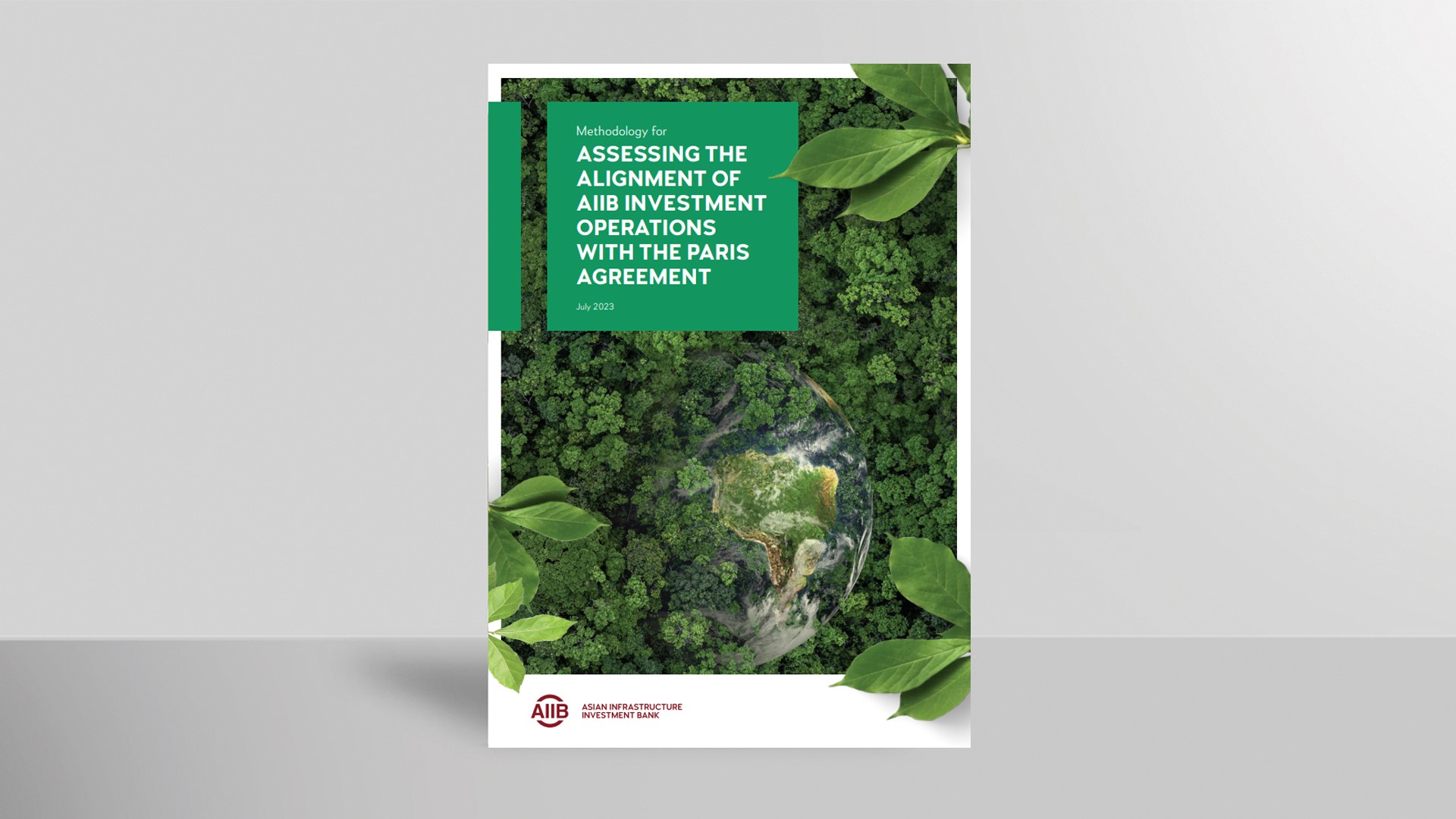

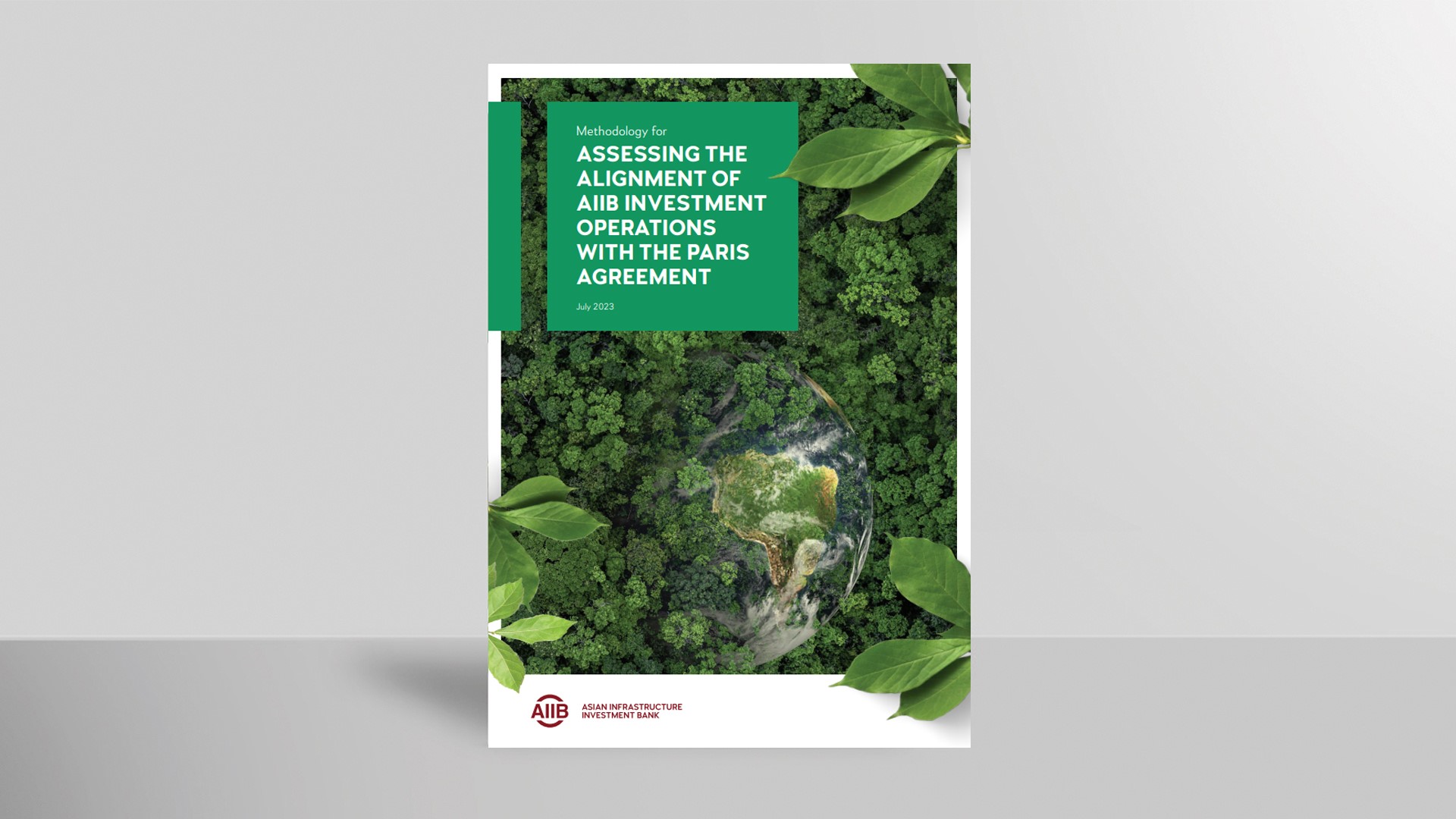
The Asian Infrastructure Investment Bank (AIIB) has issued its methodology for assessing the alignment of its investment operations with the Paris Agreement. This means that starting today, all AIIB’s new investment operations will be consistent with low-carbon and climate-resilient development pathways.
AIIB first announced on Oct 26, 2021, that it was going to fully align with the Paris Agreement by July 1, 2023. With the adoption of the methodology, AIIB meets its commitment to actively support infrastructure projects that contribute to climate change mitigation, adaptation and resilience, and reinforces its mission to promote sustainable infrastructure development in Asia and beyond.
"From today onwards, all of AIIB’s new financing will be aligned with the Paris Agreement. The detailed process for how we will achieve this, published today, constitutes a major milestone for AIIB. Tackling the urgency of climate change necessitates rapid and collective action. We are dedicated to working with all our Members and partners to achieve the goals of the Paris Agreement. As a multilateral development bank, we understand our pivotal role in advancing sustainable development and supporting our Members in their transition to low-carbon and resilient economies. By aligning with the Paris Agreement, we affirm our commitment to financing projects that promote sustainable Infrastructure for Tomorrow,” said AIIB President Jin Liqun.
Established in the wake of the Paris Agreement, AIIB has been actively engaged in the joint MDB efforts in developing a framework for aligning its financing operations with the goals of the Paris Agreement. In line with this, it has developed its own detailed technical methodology, which provides guidance on the application of the joint MDB methodological framework to AIIB operations. Specifically, AIIB investment operations will:
- Be aligned with the overall mitigation goals (BB1) of the Paris Agreement, that is, be consistent with a low greenhouse gas (GHG) emissions development pathway for the respective country and not undermine a transition to a decarbonized economy, in that country or globally, taking into account countries’ common but differentiated responsibilities and respective capabilities; and
- Be aligned with the overall adaptation goals (BB2) of the Paris Agreement, by actively managing material physical climate risks, based on systematic and robust risk screening and assessment, in a manner consistent with climate-resilient development pathways. In addition, AIIB will seek to support the enhancement of climate-related disaster resilience of clients and their communities to the adverse impacts of climate change.
AIIB’s methodology will be applied to all projects financed through direct lending, as well as through financial intermediaries.
AIIB believes that aligning its new investments with the Paris Agreement goes beyond mere compliance. According to Vice President for Strategy and Policy Sir Danny Alexander, “Paris alignment will add significant value for our clients by ensuring that projects are designed, prepared and implemented with climate considerations at their core. But it also signifies a commitment to collectively go above and beyond the minimum requirements set forth by international agreements. Rather than simply meeting the minimum obligations, Paris alignment demonstrates a willingness to take bold action, set ambitious targets, and pursue innovative solutions to mitigate greenhouse gas emissions and promote sustainable infrastructure. We recognize our responsibility to scale up further our support for the climate transition in Asia, and Paris Alignment is one of the tools we will use to help play our part in delivering this critically important global agenda.”
AIIB’s Corporate Strategy also contains a commitment to scale up its annual climate finance approvals to at least 50 percent of total approved financing by 2025. In 2022, AIIB’s climate finance amounted to USD2.39 billion, or 56 percent of total approved financing,1 up from 48 percent in the previous year and surpassing its 2025 target. It has also set in motion the development of more structures, frameworks and products for climate adaptation and resilience.
Read more about AIIB’s methodology here.
1. AIIB calculated its 2022 climate financing share excluding financing approved through the COVID-19 Crisis Recovery Facility.