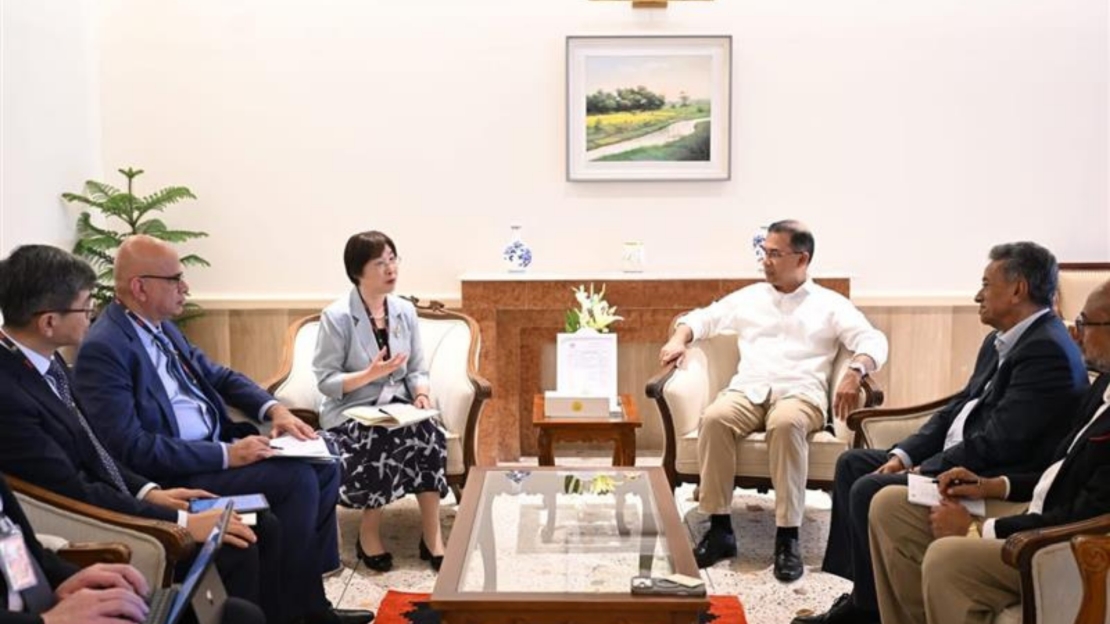


Asian Infrastructure Investment Bank (AIIB) President Zou Jiayi met with Prime Minister Tarique Rahman of Bangladesh as part of her listening tour of members, which this week also included Cambodia, Malaysia and the Lao PDR. The engagement reaffirmed the Bank’s commitment to paying careful attention to members’ needs and strengthening support for developing economies amid a challenging external environment, including adverse spillover effects arising from conflict in the Middle East.
Zou and the Prime Minister exchanged views on Bangladesh’s urgent needs and development agenda, with a particular focus on energy security, resilience and affordability, as well as the importance of coordinated emergency responses to external pressures affecting economic stability.
They discussed potential forms of support the Bank could provide, including fast‑disbursing instruments, to help address immediate stabilization needs while also advancing medium‑ to longer‑term investment priorities, in line with AIIB’s mandate, policies and procedures.
“Through close engagement with our members, AIIB seeks to better understand their priorities and tailor our support to address development challenges, strengthen economic resilience and advance sustainable growth,” Zou said.
Bangladesh is a founding member of AIIB and a longstanding partner of the Bank. AIIB remains committed to deepening this partnership by supporting the economy’s efforts to advance sustainable infrastructure, strengthen economic resilience, and address evolving development challenges in line with its national priorities.
Zou noted that insights gathered during the listening tour will be brought back for further discussion within the Bank to help inform future engagement and support, based on member needs.
About AIIB
The Asian Infrastructure Investment Bank is a multilateral development bank dedicated to financing “Infrastructure for Tomorrow,” with sustainability at its core. AIIB began operations in 2016, now has 111 approved members worldwide, is capitalized at USD100 billion, and is AAA-rated by major international credit rating agencies. AIIB collaborates with partners to mobilize capital and invest in infrastructure and other productive sectors that foster sustainable economic development and enhance regional connectivity.