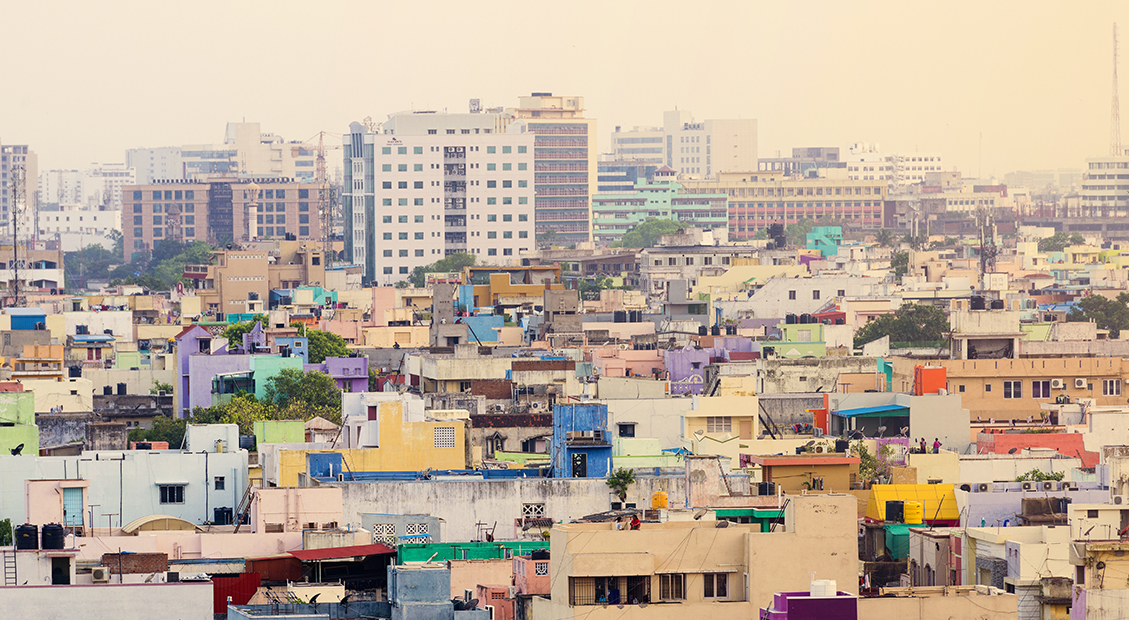

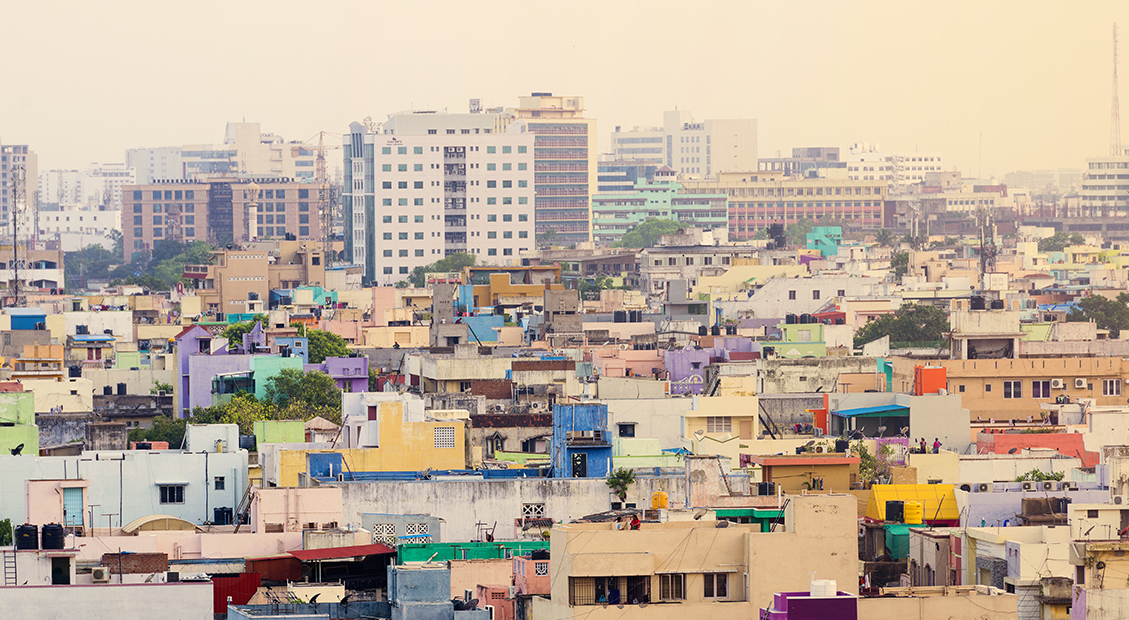
The State Government of Tamil Nadu in India is transforming its capital of Chennai into a city that is green, livable, competitive and resilient, and the Asian Infrastructure Investment Bank (AIIB) is lending a hand in line with its mission to finance green and resilient Infrastructure for Tomorrow (i4t).
AIIB has approved the USD150-million “Chennai City Partnership: Sustainable Urban Services Program” that aims to strengthen institutions and improve the quality and financial sustainability of selected urban services in Chennai. The southern state of Tamil Nadu is an economic powerhouse and is one of India’s most urbanized states. Chennai dominates the state’s demographic and economic landscape and is experiencing rapid physical growth and changes in its boundaries. However, Chennai faces tremendous infrastructure deficits and low service quality in core urban sectors such as water resource management, water supply and sanitation, urban mobility, solid waste management and public health.
“AIIB is adapting and innovating constantly to deliver investment solutions that overcome the challenges our Members face,” said D.J. Pandian, Vice President, Investment Operations (Region 1). “In this case, we are helping India to increase their resilience and meet their objectives even during the most difficult times. We envision this project as a first-phase engagement and a building block for AIIB’s long-term partnership with India and—in this particular case, Chennai—by supporting the government’s program of expenditures. As a subset of the overall government program, this financing will cover core urban services and is aligned with AIIB’s mandate, thematic priority to promote green infrastructure, and sustainable cities strategy.”
Aside from urban infrastructure delivery gaps, Chennai has operating frameworks that focus on infrastructure asset creation rather than on service delivery performance in terms of coverage, quality, sustainability and resilience. Sustainable financing frameworks are also lacking, with very low own-source revenue generation, excessive and unsustainable reliance on the state government for input-based budget allocations and operating subsidies.
Chennai is also highly vulnerable to natural disasters, climate change and pandemics, as demonstrated by the COVID-19 emergency. The crises induced by COVID-19 have highlighted the need for better services as well as limitations of current delivery models. The pandemic created the momentum for Tamil Nadu to pivot toward sustainable infrastructure delivery and building back better and greener.
The program will complement AIIB-supported urban transport projects—such as the Chennai Metro Rail (Phase 2, Corridors 4 and 5) and Peripheral Ring Road—by improving integration of public transport modes (in terms of routes, institutions and technology) and strengthening relevant institutions.
“AIIB’s mission is to finance i4t—green infrastructure with sustainability, innovation and connectivity at its core,” added Pandian. “We are fully supporting our Member, India, in their mission to increase the resilience of Chennai and transforming the city into a green, livable, competitive and resilient capital.”
About AIIB
The Asian Infrastructure Investment Bank (AIIB) is a multilateral development bank whose mission is financing the Infrastructure for Tomorrow—infrastructure with sustainability at its core. We began operations in Beijing in January 2016 and have since grown to 104 approved members worldwide. We are capitalized at USD100 billion and Triple-A-rated by the major international credit rating agencies. Working with partners, AIIB meets clients’ needs by unlocking new capital and investing in infrastructure that is green, technology-enabled and promotes regional connectivity.