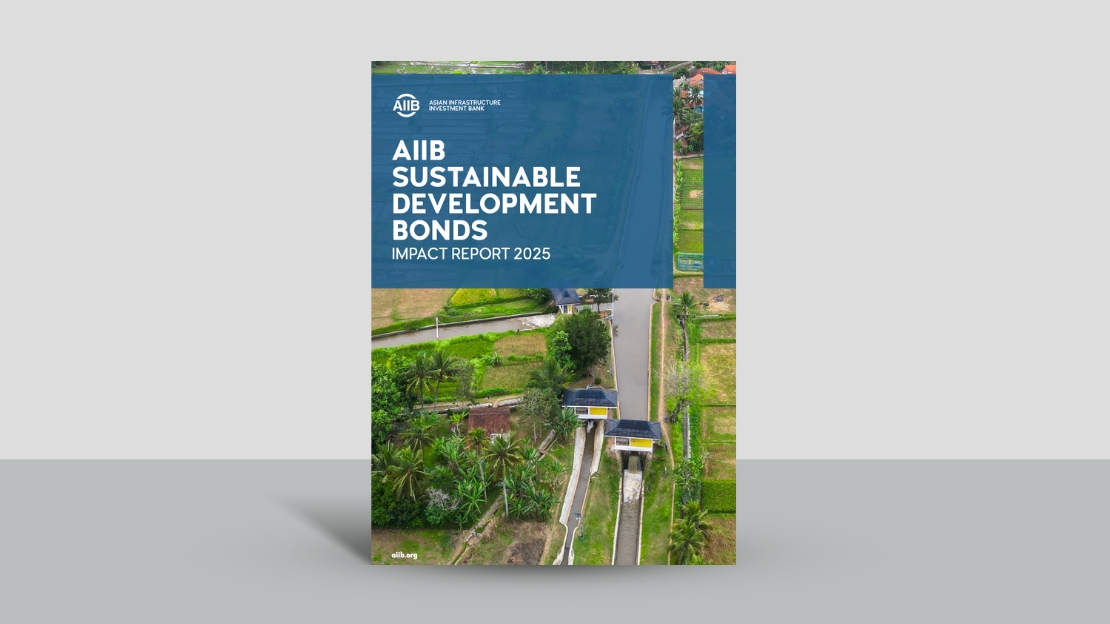

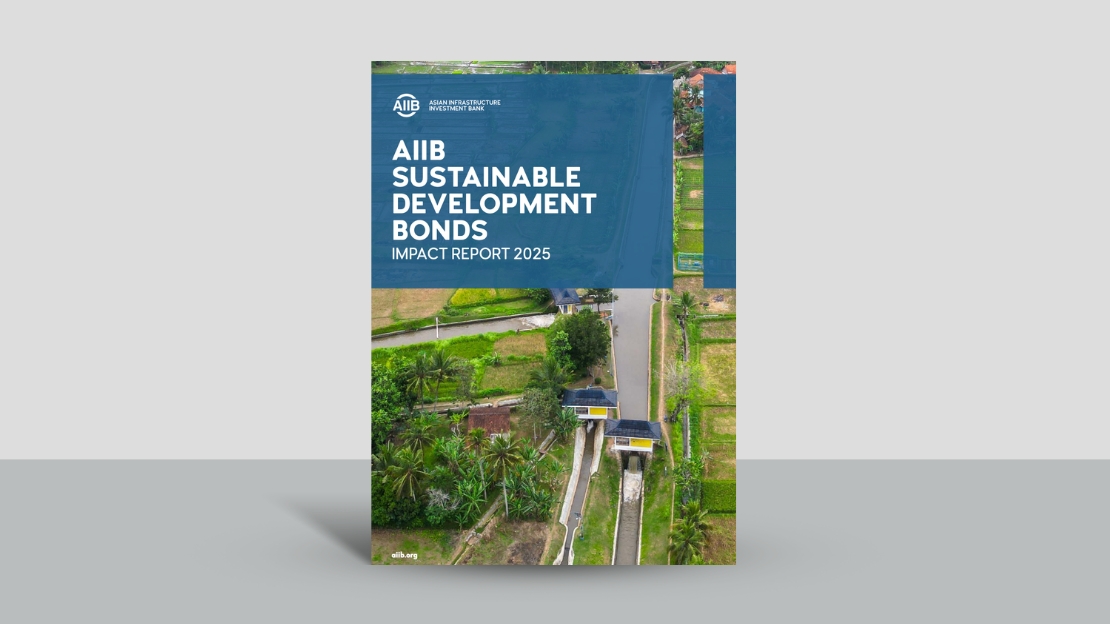
Ten years after AIIB’s founding, the impact of some of our earliest projects is becoming clear. The AIIB Sustainable Development Bonds Impact Report 2025 highlights the benefits already reaching people, communities and economies, while looking ahead to results still to come.
Since beginning operations, AIIB has disbursed over USD38.4 billion in financing across infrastructure sectors including energy, transport, water, sustainable cities, digital infrastructure and technology, health, and education. But the figure alone does not tell the full story. What has this financing meant for people in our member economies across Asia and beyond?
Impact takes different forms – from improved access to water, sanitation and transport to greater climate resilience and economic connectivity. Some benefits can be measured now through completed projects. Other benefits will materialize as newer investments progress. Together they show how infrastructure financing can translate into practical improvements for all the communities we serve.
Take for example the National Slum Upgrading Project in Indonesia. Through better roads, sanitation, clean water, drainage and public facilities, 8.66 million people have benefited from improved infrastructure, safer surroundings and more reliable access to water.
In northern Côte d’Ivoire, a rural roads project is expected to benefit approximately 3.25 million people. It will improve all-weather access to schools, healthcare, markets and trade centres while reducing travel times, transport costs and post-harvest losses. All this will strengthen agricultural supply chains and regional trade.
As treasurer of a multilateral development bank, I understand that demonstrating impact is an important part of raising capital. Central banks and institutional investors want to understand the measurable, multidimensional outcomes associated with their investments. The results reported in our annual Impact Report give them greater insight into what our sustainable bonds support and reinforce the investment case for sustainable infrastructure.
My core focus is ensuring that capital flows predictably and at the scale required by long-term infrastructure investment. In 2025, our Sustainable Development Bond program raised USD10.2 billion across 13 currencies, achieving competitive pricing, narrow spreads and consistently strong investor demand.
Highlights included our inaugural public Hong Kong-dollar benchmark bond, the first public-format bond by an international issuer to settle locally through the Central Moneymarkets Unit operated by the Hong Kong Monetary Authority, and our second Climate Adaptation Bond. The latter raised AUD500 million to finance projects in which climate adaptation accounts for at least 20 percent of total project financing.
This funding supports a growing portfolio. Project approvals reached USD10.6 billion across 57 projects in 2025, with 71% of the financing supporting climate-related outcomes. As the portfolio expands, our funding program will grow with it and is expected to reach a record USD11 billion in 2026.
Our new Impact Report offers an important early view of what AIIB’s financing is delivering. As more projects reach completion, the evidence base will deepen, allowing us to measure results more fully, learn from experience and direct capital where it can have the greatest impact.
One recently approved project spanning sustainable finance, the energy transition and green and resilient infrastructure, Brazil’s VERDES program, aims to mobilize USD5 billion in private capital and bring 1.4 million hectares of degraded land into sustainable use. Its targets also include a heat-health early warning system and two new conservation areas covering 20,000 hectares of mangroves. The result should be healthier ecosystems, more resilient public services and communities better protected from climate-related risks.
The foundation is strong. AIIB has earned the trust of investors, partners and member governments, supported by impact measurement and a decade of investment in sustainable infrastructure.
The connection between the capital we raise and achieving tangible benefits for people, communities and economies is clear. As AIIB enters its second decade, our task is to strengthen that connection and continue to finance resilient and impactful infrastructure for tomorrow.