
The recent pandemic highlights the need to review response strategies to ensure resilience, preparedness and the capacity to tackle future public health emergencies effectively. Central to Mongolia’s success was the collaboration between the Asian Development Bank (ADB) and the Asian Infrastructure Investment Bank (AIIB), which exemplified how international partnerships can amplify crisis response and recovery efforts.
Although it might feel like a distant memory, only five years ago the coronavirus disease (COVID-19) began disrupting daily life worldwide. First detected in December 2019, it quickly escalated into a global pandemic reminiscent of the last major one a century earlier: the 1918 influenza pandemic.
Mongolia was not spared from this crisis, prompting its government to immediately mobilize resources to prevent the spread of the novel disease. As early as mid-January 2020, strict emergency measures were introduced, including travel restrictions, limits on gatherings, business closures and mandatory mask-wearing. This astute decision came right before the Lunar New Year, the most important festivity in the country and a time of significant travel and family reunions. From March 2020, Mongolia began repatriating citizens from abroad while enforcing quarantine protocols for incoming travelers. Despite initial challenges, these whole-of-society efforts yielded visible results.
Mongolia successfully prevented community transmission of COVID-19 until mid-November 2020. This provided breathing space to prepare for the anticipated surge in cases, update national emergency management plans, formulate a national COVID-19 vaccination strategy and ensure a smooth implementation of vaccination protocols while working to secure vaccine availability. Upon detecting community transmission, the government enforced three rounds of strict lockdowns until mid-April 2021, significantly curbing the spread of the virus. Consequently, Mongolia achieved one of the lowest case-fatality ratios globally.
Despite these efforts, the pandemic placed immense pressure on Mongolia’s economy, especially the health system. The health system’s limited fiscal and human resources were stretched thin due to the sheer number of tests, quarantines, hospitalizations and extra remuneration for frontline healthcare workers.
Prioritizing pandemic-related health services disrupted essential care for noncommunicable diseases – the leading causes of mortality in Mongolia. The interruption of antenatal care in urban and rural areas, including home visits to pregnant women in remote regions and maternity services in hospitals, contributed to a spike in maternal mortality (94.9 per 100,000 live births in 2021, up from 23 in 2019). Cardiovascular, cancer and respiratory care services were also strained.
ADB-AIIB Partnership: Accelerating Vaccine Access
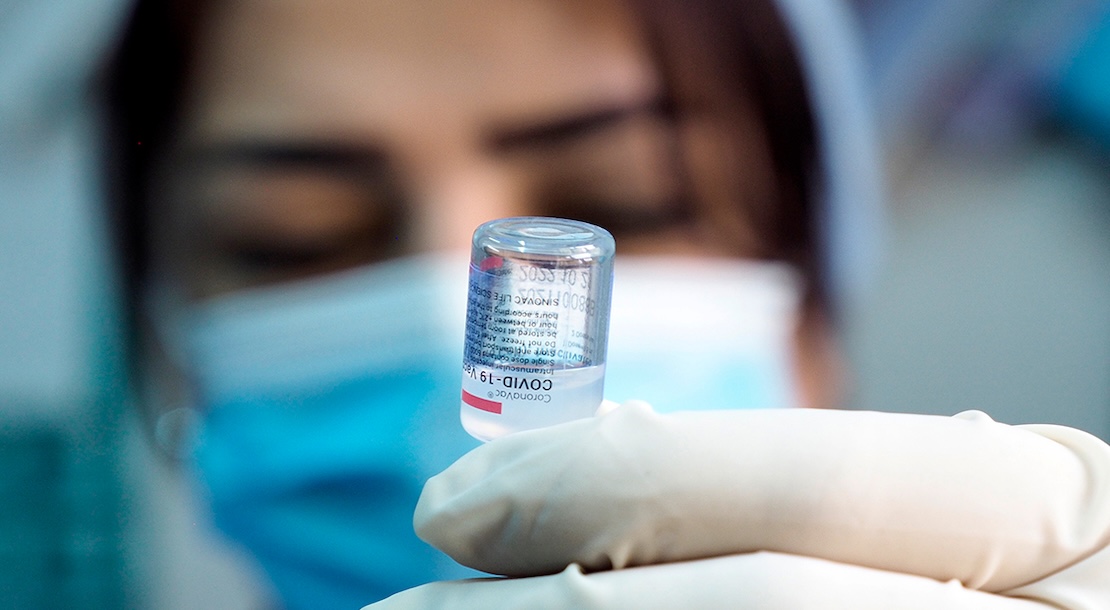
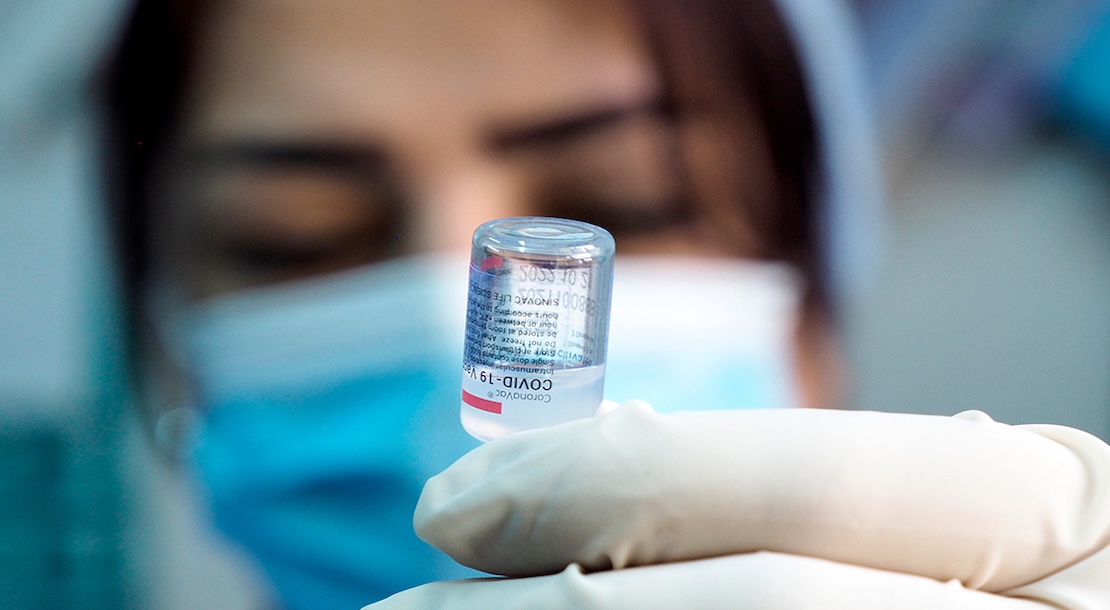
Vaccination emerged as a critical tool to curb the pandemic. When the first vaccines became available, the government mobilized efforts to secure supply, leveraging ADB and AIIB’s collaborative support. Building on their 2020 partnership under Mongolia’s COVID-19 Rapid Response Program, ADB and AIIB approved financing through the Asia Pacific Vaccine Access Facility (APVAX), enabling swift vaccine procurement.
Nationwide vaccination commenced Feb. 23, 2021, and Mongolia was able to use its high-coverage routine child immunization program (99.4% in 2019) to procure sufficient doses and facilitate rapid rollout, targeting frontline workers and vulnerable groups first before expanding nationally. By June 2022, restrictions were lifted due to high coverage: 86% of target groups and 66% of the total population received two doses, with boosters reaching 54% and 32%, respectively. The World Health Organization lauded Mongolia’s vaccination drive and its pandemic response as exemplary.
Post-pandemic recovery prioritized restoring disrupted health services. The government reallocated unused ADB-AIIB vaccine funds to rebuild primary care and hospital systems. Maternal mortality dropped to 26 and 23 per 100,000 live births in 2023 and 2024, respectively, while noncommunicable disease care rebounded.
Mongolia’s experience underscores the importance of timely action, vaccination and adaptive international collaboration. The ADB-AIIB partnership not only ensured vaccine access but also demonstrated flexibility in addressing evolving health needs. These efforts offer a blueprint for future crises: resilient systems require preparedness, agility and cooperation.
For more examples of how AIIB and its partners are co-creating solutions through innovative partnership mechanisms, see Scaling Impact through Collaboration: AIIB’s Partnerships in Action, AIIB’s inaugural Partnership Report.
This blog reflects the authors’ views and not necessarily those of AIIB or ADB.